 English EN
  Indonesia ID

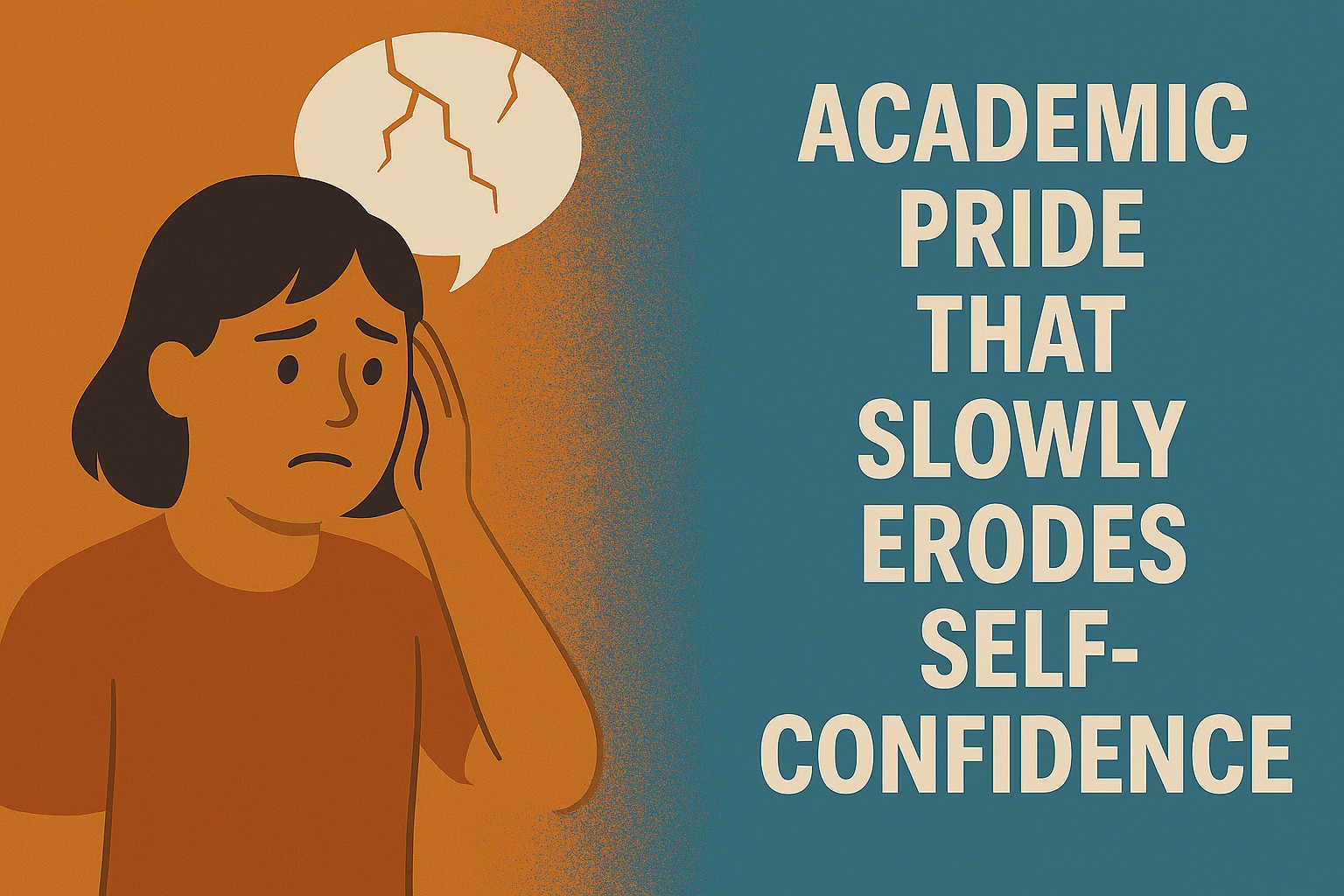
Academic success is often celebrated as a source of confidence. High grades, praise from teachers, and recognition among peers can build a strong sense of achievement. However, when academic pride becomes the foundation of self-worth, it can quietly begin to erode self-confidence instead of strengthening it.
What starts as healthy ambition may gradually transform into pressure, fear of failure, and emotional exhaustion. Understanding this paradox is essential for students who want long-term academic growth without sacrificing their mental well-being.
UNDERSTANDING ACADEMIC PRIDE
Academic pride develops naturally when students invest effort and see positive results. It reinforces discipline and motivates consistent performance. In balanced amounts, pride helps students set higher goals and remain committed.
Problems arise when pride becomes identity. When students define themselves solely by their academic achievements, their confidence becomes fragile. A single low score or mistake can feel like a personal failure rather than a temporary setback.
In this state, pride shifts from motivation to pressure.
HOW PRIDE TURNS INTO PERFORMANCE PRESSURE
As expectations increase, students may feel the need to constantly prove their intelligence. Instead of focusing on learning, they focus on maintaining a flawless image.
This mindset creates performance anxiety. Students may avoid challenging subjects to protect their record. They may hesitate to ask questions for fear of appearing less capable. Over time, the effort to protect their reputation becomes emotionally exhausting.
The stronger the attachment to being “the smart one,” the greater the fear of losing that label.
THE LINK BETWEEN PERFECTIONISM AND SELF-DOUBT
Perfectionism often hides behind academic pride. Students who aim for perfect results may struggle to accept anything less. Even small mistakes can trigger intense self-criticism.
Ironically, this constant self-evaluation reduces genuine confidence. Instead of feeling secure, students become dependent on external validation. Their self-esteem rises and falls based on grades, feedback, or comparison with peers.
Confidence built on perfection is unstable. When perfection becomes impossible—as it often does—self-doubt grows stronger.
SOCIAL COMPARISON AND INTERNAL INSECURITY
Academic environments frequently encourage comparison. Ranking systems, awards, and public achievements can unintentionally increase insecurity.
Students who once felt proud may begin to measure their worth against others. If someone performs better, pride turns into silent competition. This comparison mindset shifts focus away from personal progress and toward external approval.
The result is a gradual erosion of authentic self-confidence.
BUILDING CONFIDENCE BEYOND ACHIEVEMENT
To prevent academic pride from damaging self-confidence, students must separate identity from performance. Achievement should be viewed as evidence of effort, not proof of personal value.
Developing a growth mindset helps reframe mistakes as opportunities rather than threats. Accepting imperfection allows students to take academic risks, explore new ideas, and ask for help without shame.
Confidence becomes stronger when it is rooted in resilience, adaptability, and continuous learning—not in flawless results.
PRACTICAL STRATEGIES FOR HEALTHY ACADEMIC MOTIVATION
Students can maintain ambition while protecting their self-confidence by:
- Setting progress-based goals instead of perfection-based goals.
- Practicing self-compassion after setbacks.
- Reducing unhealthy comparison with peers.
- Valuing effort and improvement over recognition.
- Seeking feedback for growth rather than validation.
These strategies encourage sustainable motivation and emotional stability.
CONCLUSION
Academic pride can inspire excellence, but when tied too closely to identity, it may slowly erode self-confidence. The pressure to remain consistently outstanding can create anxiety, perfectionism, and self-doubt.
True confidence is not built on never failing. It is built on the ability to learn, adapt, and grow despite setbacks. By redefining success and embracing imperfection, students can preserve both their ambition and their self-belief.