 English EN
  Indonesia ID

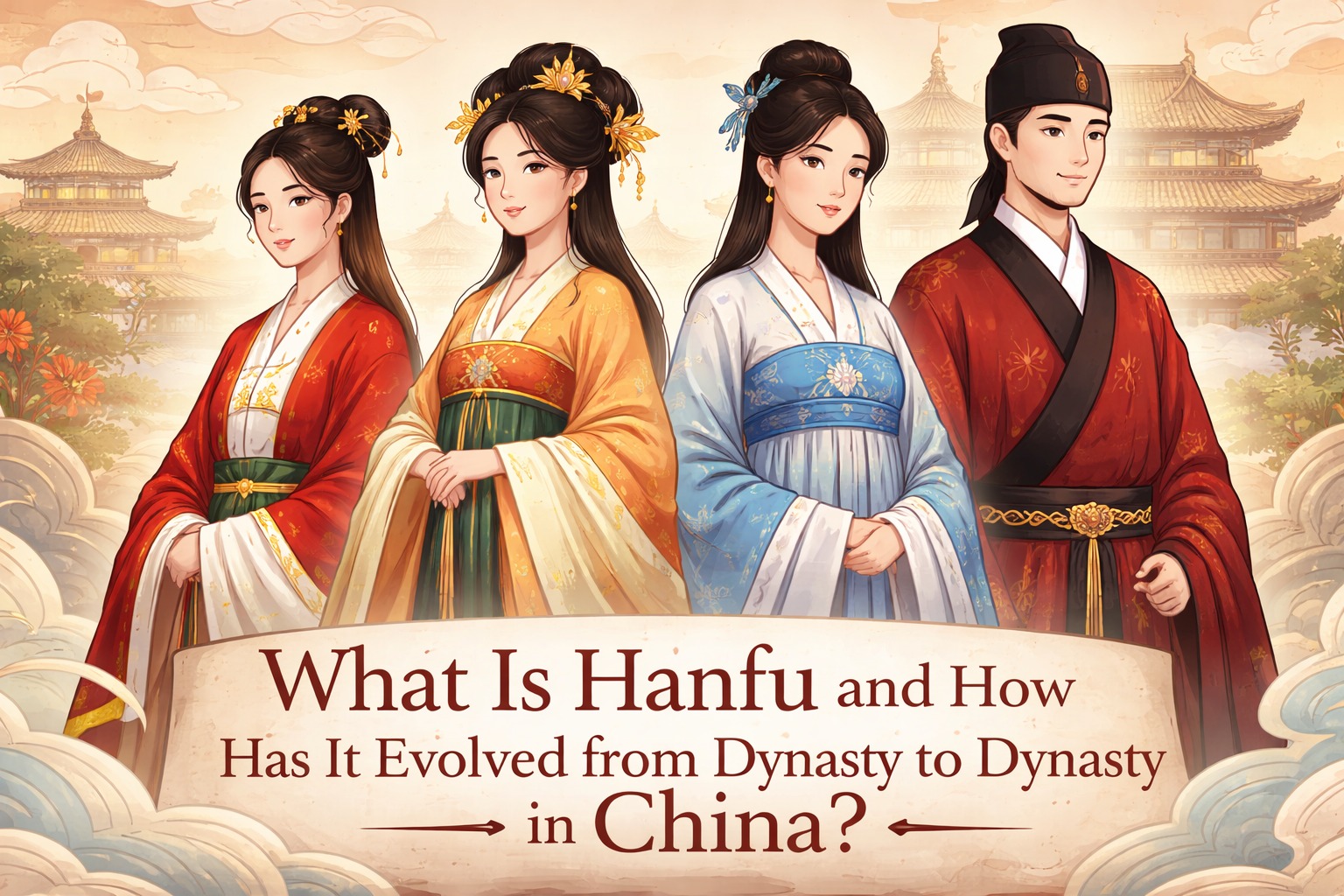
Traditional clothing does not merely function as body covering; it also reflects a nation’s cultural identity and history. One traditional garment with significant historical value is Hanfu, the traditional attire of ancient Chinese society. In recent years, Hanfu has regained popularity, especially among younger generations. So, what is Hanfu, and how has it evolved across dynasties in China?
What Is Hanfu?
Hanfu is the traditional clothing of the Han people, worn for over 3,000 years. The word “Hanfu” literally means “Han people’s clothing.” Its distinctive features include loose cuts, wide sleeves, crossed collars, and the use of a belt instead of buttons.
Hanfu is not merely attire but a symbol of Confucian values such as modesty, harmony, and social hierarchy. In the past, the style, color, and motifs of Hanfu also indicated the wearer’s social status.
The Origins of Hanfu in Ancient China
The history of Hanfu dates back to the Xia, Shang, and Zhou Dynasties. During this period, the basic structure of Hanfu—an upper garment (*yi*) and lower garment (*shang*)—was formed. Although simple in design, it reflected strict ritual and customary rules.
The Evolution of Hanfu across Dynasties
Hanfu during the Qin and Han Dynasties
During the Qin and Han Dynasties, Hanfu underwent standardization. The *shenyi* (one-piece garment) became popular, symbolizing unity and order in line with a centralized government. At this time, Hanfu became firmly established as the national attire of the Han people.
Hanfu in the Tang Dynasty
The Tang Dynasty is known as the golden age of Chinese culture. Hanfu during this era became bolder and more elegant. Bright colors, light fabrics, and more open designs—especially for women—reflected foreign cultural influences and social openness.
Hanfu in the Song Dynasty
In contrast to the Tang Dynasty, Hanfu during the Song Dynasty became simpler and more refined. Designs were more modest, emphasizing Confucian moral values. Minimalist aesthetics defined this period.
Changes during the Yuan and Ming Dynasties
During the Mongol-led Yuan Dynasty, the use of Hanfu declined. However, in the Ming Dynasty, Hanfu was revived with more structured and formal designs. Court attire symbolized the resurgence of Han cultural identity after foreign influence.
The Disappearance of Hanfu in the Qing Dynasty
When the Qing Dynasty came to power, Hanfu was gradually replaced by Manchu clothing such as the *qipao*. The Qing government even mandated Manchu dress codes, causing Hanfu to fade from everyday life.
The Revival of Hanfu in the Modern Era
In modern times, Hanfu has been revived through the Hanfu Movement. Young people wear Hanfu at festivals, cultural events, and even in daily activities. Social media has played a major role in promoting Hanfu as a symbol of cultural pride and national identity.
Differences between Hanfu and Other Traditional Chinese Clothing
Hanfu is often mistaken for *qipao* or *cheongsam*, but they are different. Hanfu originates from ancient Han culture, while *qipao* developed during the Qing Dynasty and features a more modern, form-fitting design.
Hanfu is a traditional Chinese garment rich in history, philosophy, and cultural identity. Its evolution across dynasties reflects the social, political, and cultural changes throughout Chinese history. Its modern revival proves that cultural heritage remains relevant and adaptable over time.