 English EN
  Indonesia ID

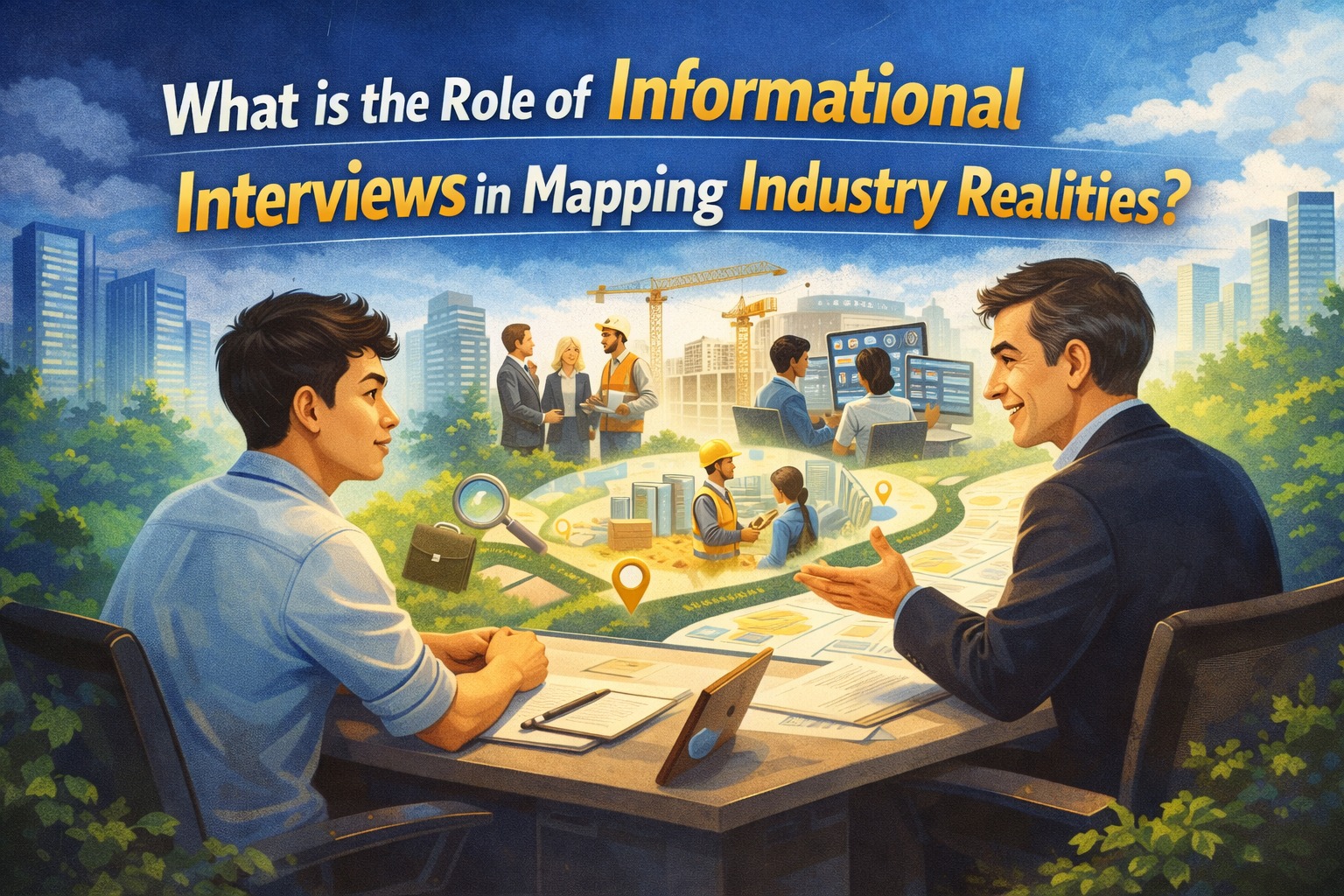
Many students form assumptions about the working world based solely on social media, friends’ stories, or idealized images. As a result, they often develop misconceptions about industry realities—ranging from required skills and work culture to actual career paths. This is where **informational interviews** become a highly valuable tool for mapping reality, not just assumptions.
What Is an Informational Interview?
* Not a job interview — the goal is not to apply or be evaluated, but to learn.
* Purely insight-driven — a 15–30 minute conversation with a professional in a field you are interested in, aimed at understanding industry realities from an insider’s perspective.
Key Benefits of Informational Interviews
* Career path validation — helps determine whether a field you think suits you actually aligns with your skills, interests, and expectations.
* Understanding real challenges — reveals work pace, pressure, industry trends, and realities that are often invisible from the outside.
* Expanding your network — builds professional relationships without recruitment pressure, which may open future opportunities.
How to Conduct an Informational Interview Professionally
* Prepare a structured set of questions — covering the interviewee’s background, job scope, essential skills, daily challenges, and advice for beginners.
* Maintain professionalism — be concise, polite, punctual, and avoid asking directly for a job.
* Follow up — send a thank-you message and share updates on your progress to maintain the relationship.
Insights You Should Gain
* Skills that are most in demand and those commonly lacking among entry-level candidates.
* The reality of work culture and expectations often not mentioned in job postings.
* Industry trends and changes you should anticipate.
* Practical advice on the most effective pathways to enter the field.
Conclusion
Informational interviews are a career research tool that is often underestimated, yet extremely powerful. In just 15–30 minutes, you can avoid choosing the wrong career path, understand which skills truly matter, and build a high-quality professional network early on. The sooner you map out industry realities, the more strategic your career decisions will be.