 English EN
  Indonesia ID

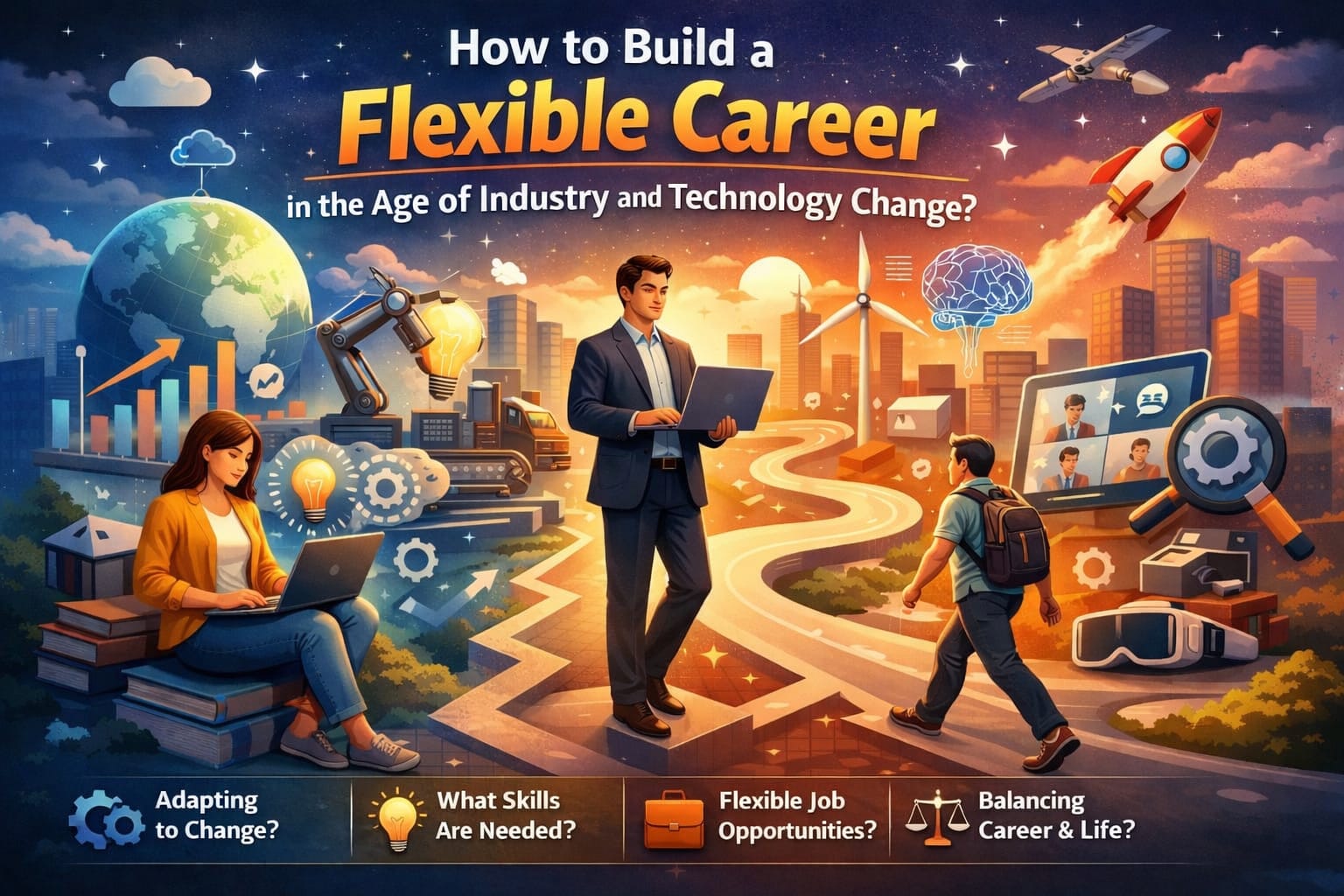
Industrial change and technological advancements are accelerating year after year. Automation, artificial intelligence, remote work, and the emergence of new professions are rendering conventional career concepts irrelevant for many. Amidst these dynamics, building a flexible career is key to remaining relevant, adaptive, and competitive. This article will discuss strategic steps you can take to build a flexible career in an era of industrial and technological change.
UNDERSTANDING INDUSTRY AND TECHNOLOGY CHANGES
1. Recognize industry trends early on
Keeping up with industry developments such as digitalization, AI, big data, and the green economy helps you predict what skills will be needed in the future.
2. Recognizing the shift in workforce needs
Many companies now value skills more than formal degrees, making career flexibility increasingly important.
3. Open insight into new work models
Freelancing, remote working, and the gig economy are examples of work models that are becoming increasingly common and offer high flexibility.
DEVELOPING RELEVANT AND ADAPTIVE SKILLS
1. Focus on transferable skills
Skills such as communication, problem solving, time management, and leadership can be applied across a wide range of careers.
2. Improve digital literacy
The ability to use technology, digital tools, and online platforms is a primary requirement in almost all industries.
3. Continuous learning (lifelong learning)
Taking online courses, webinars, or certifications helps you stay on top of job market needs.
BUILDING A PERSONAL BRAND AND PROFESSIONAL NETWORK
1. Determine a clear career positioning
Determine the key skills you want to highlight so that they are easily recognized by recruiters or clients.
2. Utilizing digital platforms
LinkedIn, a personal website, or an online portfolio can strengthen your professional image in the digital world.
3. Actively build networking
Joining a professional community or attending industry events opens up new collaboration and career opportunities.
IMPLEMENTING FLEXIBLE AND PROACTIVE MINDSET
1. Open to change and challenges
Change is not a threat, but an opportunity to grow and discover new career paths.
2. Dare to try different fields
Flexible careers are often shaped by cross-functional or cross-industry experiences.
3. Manage risks with careful planning
Flexibility does not mean being directionless, but having a backup plan and clear long-term goals.
CONCLUSION
Building a flexible career amidst industry and technological changes is no longer an option, but a necessity. By understanding industry trends, developing adaptive skills, building your personal brand, and adopting an open mindset, you can create a sustainable and relevant career path for the future. Career flexibility allows you to not only survive but also thrive in an ever-changing workplace.