 English EN
  Indonesia ID

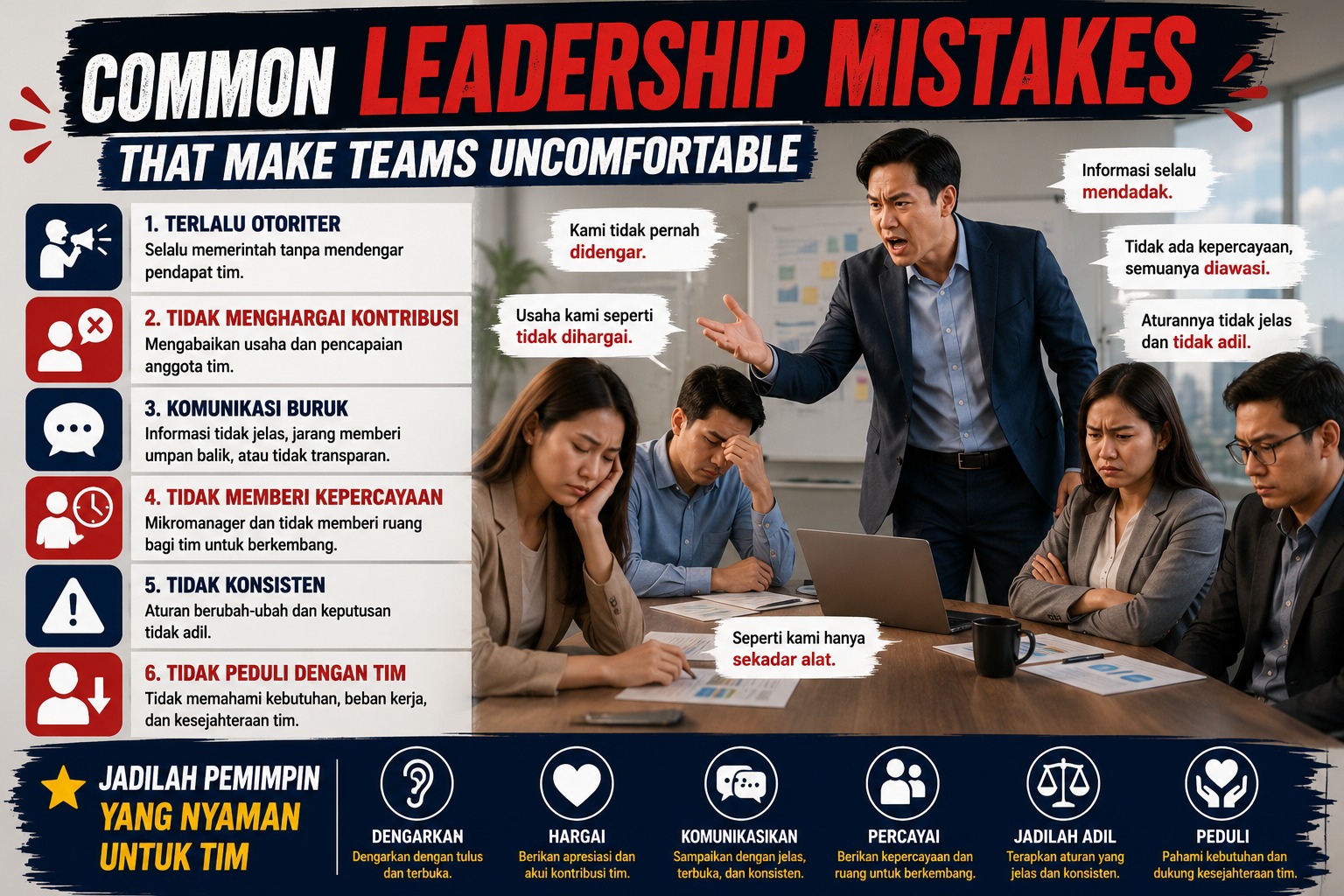
Leadership plays an important role in creating a healthy and productive work environment. A good leader can motivate employees, encourage teamwork, and build trust within a team. However, poor leadership habits can create discomfort, reduce morale, and negatively affect productivity. Many leaders make mistakes without realizing how much their behavior impacts the people around them.
 0-8888-9999-64
 pmb.stekom.ac.id/2727
Understanding common leadership mistakes is essential for anyone who wants to become a better leader. By identifying and avoiding these problems, leaders can build stronger relationships with their teams and create a more positive workplace atmosphere.
LACK OF COMMUNICATION
One of the most common leadership mistakes is poor communication. Team members often feel confused or frustrated when leaders fail to provide clear instructions, expectations, or updates. Miscommunication can lead to misunderstandings, missed deadlines, and unnecessary stress.
Some leaders only communicate when problems occur, which can create tension within the team. Effective leaders should maintain open and consistent communication, encourage feedback, and listen carefully to employee concerns.
Clear communication helps employees feel valued, informed, and connected to the goals of the organization.
MICROMANAGING EMPLOYEES
Micromanagement happens when leaders control every small detail of their team’s work. While supervision is important, excessive control can make employees feel distrusted and pressured.
Team members who are constantly monitored may lose confidence and motivation because they feel they have no freedom to make decisions. Micromanagement can also reduce creativity and slow down productivity.
Successful leaders trust their teams and provide guidance without controlling every action. Giving employees responsibility and independence often leads to better performance and stronger teamwork.
IGNORING EMPLOYEE OPINIONS
Employees want to feel heard and respected. Leaders who ignore suggestions, ideas, or feedback may create an uncomfortable environment where team members hesitate to speak openly.
When employees believe their opinions do not matter, they often become less engaged and less motivated. Over time, this can weaken collaboration and reduce innovation within the team.
Strong leaders encourage discussions and appreciate different perspectives. Listening to employees helps create trust and improves problem-solving.
SHOWING FAVORITISM
Favoritism is another leadership mistake that can damage team relationships. When leaders treat certain employees better than others, it creates feelings of unfairness and jealousy.
Employees may become uncomfortable if promotions, praise, or opportunities seem based on personal preference instead of performance. This can reduce morale and create conflicts within the team.
Good leaders treat everyone fairly and evaluate team members based on effort, skills, and results. Fair treatment helps maintain respect and professionalism in the workplace.
FAILING TO RECOGNIZE ACHIEVEMENTS
Employees appreciate recognition for their hard work and contributions. Leaders who rarely acknowledge achievements may unintentionally make their teams feel unappreciated.
Lack of recognition can decrease motivation and cause employees to lose enthusiasm for their work. Even simple appreciation, such as saying thank you or celebrating small successes, can have a positive impact on team morale.
Successful leaders understand that recognition encourages employees to stay motivated and committed.
AVOIDING RESPONSIBILITY
Some leaders blame employees when problems occur instead of taking responsibility. This behavior can create fear and reduce trust within the team.
Strong leaders admit mistakes, learn from failures, and work together with employees to find solutions. Taking responsibility demonstrates integrity and professionalism.
When leaders avoid accountability, employees may feel unsupported and become reluctant to share concerns or ideas.
POOR EMOTIONAL CONTROL
Leaders who frequently become angry, impatient, or overly emotional can create an uncomfortable atmosphere for employees. Team members may feel anxious or afraid to communicate openly.
Emotional outbursts often reduce trust and make workplace relationships more difficult. Leaders should learn to manage stress and respond calmly during challenging situations.
Emotional intelligence is an important leadership skill because it helps leaders maintain professionalism and positive interactions with others.
RESISTING CHANGE AND NEW IDEAS
Work environments continue to evolve, and leaders who refuse to adapt can limit team growth and innovation. Employees may feel frustrated when their ideas are ignored or when leaders resist improvements.
Successful leaders stay open-minded and encourage creativity. They understand that change can lead to better opportunities and stronger performance.
Supporting innovation also helps employees feel more confident in contributing ideas and solutions.
LACK OF EMPATHY
A leader who lacks empathy may focus only on results without considering employee well-being. Team members can become uncomfortable if they feel their personal challenges or emotions are ignored.
Empathetic leaders understand the importance of supporting employees both professionally and emotionally. Showing understanding and compassion helps create a healthier and more supportive work environment.
Employees are more likely to remain loyal and motivated when they feel respected and cared for.
CONCLUSION
Leadership mistakes can significantly affect team comfort, productivity, and morale. Poor communication, micromanagement, favoritism, lack of empathy, and emotional instability are some of the most common problems that make employees uncomfortable.
Becoming a better leader requires self-awareness, communication, fairness, and emotional intelligence. Leaders who are willing to learn from mistakes and improve their behavior can create stronger relationships and healthier workplace environments.
A successful leader is not only focused on achieving goals but also on building trust, respect, and motivation within the team. By avoiding common leadership mistakes, leaders can inspire employees and encourage long-term success.
Leadership Mistakes, Team Comfort, Workplace Communication, Employee Motivation, Emotional Intelligence