 English EN
  Indonesia ID

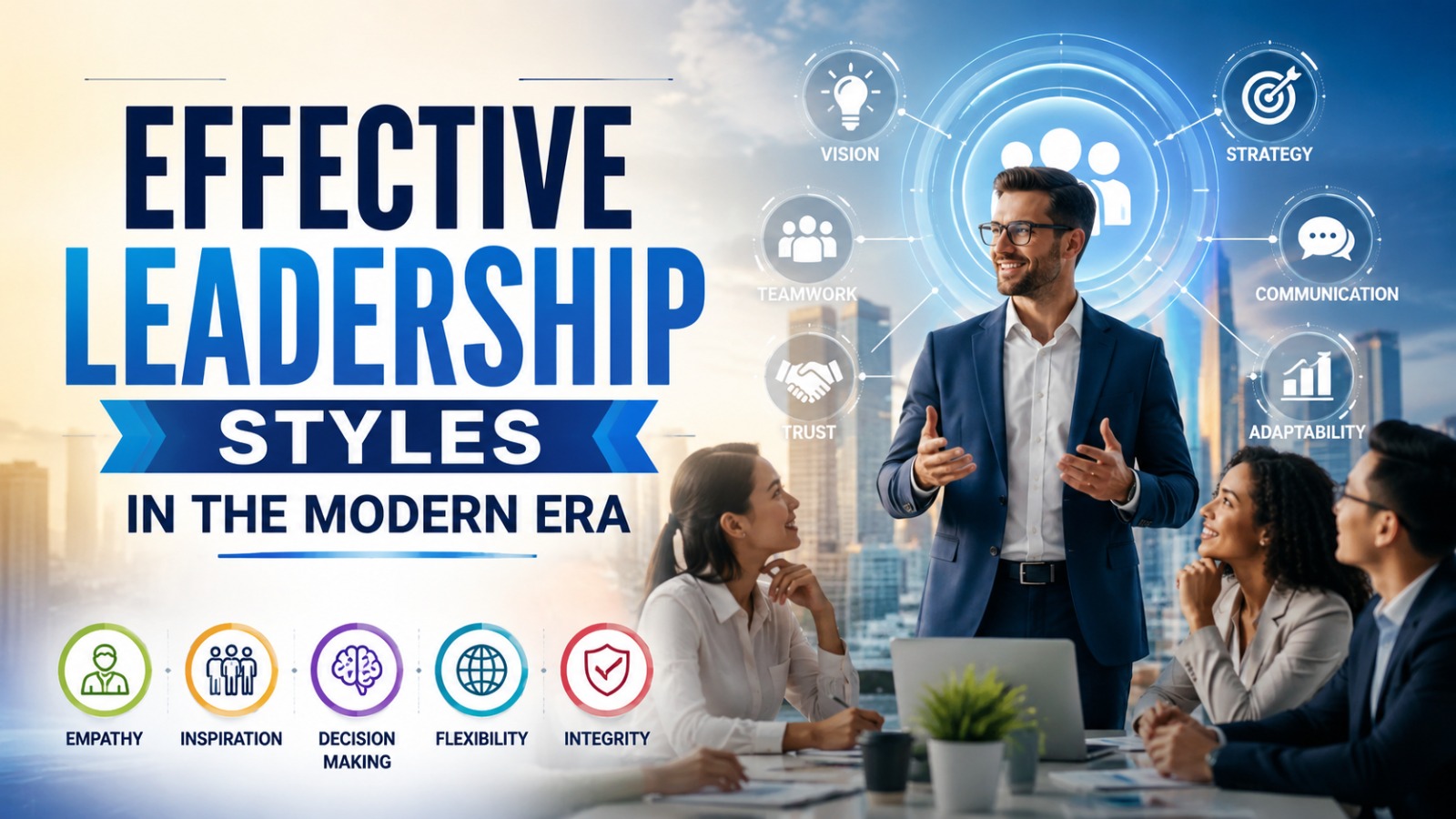
In today's fast-changing business environment, effective leadership is more important than ever. Organizations face rapid technological innovation, shifting workforce expectations, and increasing global competition. To succeed, leaders must adopt styles that inspire trust, encourage collaboration, and drive consistent results.
 0-8888-9999-64
 pmb.stekom.ac.id/2727
Modern leadership is no longer about authority alone. It is about empowering people, creating a shared vision, and adapting to constant change. This article explores the most effective leadership styles in the modern era and explains how they help organizations thrive.
THE EVOLUTION OF MODERN LEADERSHIP
Traditional leadership models often focused on hierarchy and control. Leaders made decisions at the top, while employees followed instructions. Although this approach worked in highly structured environments, it is less effective in today's dynamic workplace.
Modern organizations require leaders who can communicate openly, foster innovation, and respond quickly to new challenges. Employees also expect greater autonomy, recognition, and opportunities for growth. As a result, successful leaders combine emotional intelligence, strategic thinking, and adaptability.
TRANSFORMATIONAL LEADERSHIP
Transformational leadership is widely considered one of the most effective leadership styles in the modern era. Transformational leaders inspire employees by communicating a compelling vision and encouraging them to exceed expectations.
KEY CHARACTERISTICS
- Strong communication skills
- Clear organizational vision
- Ability to motivate and inspire
- Focus on innovation and growth
- Commitment to employee development
BENEFITS OF TRANSFORMATIONAL LEADERSHIP
This leadership style increases engagement, creativity, and productivity. Employees feel connected to the organization's goals and are more willing to contribute new ideas.
Companies undergoing digital transformation or rapid expansion often benefit from transformational leaders who can guide teams through change.
DEMOCRATIC LEADERSHIP
Democratic leadership, also known as participative leadership, involves employees in decision-making. Leaders seek feedback, encourage discussion, and value diverse perspectives.
KEY CHARACTERISTICS
- Collaborative decision-making
- Open communication
- Respect for employee input
- Strong team participation
BENEFITS OF DEMOCRATIC LEADERSHIP
This approach improves employee satisfaction and builds trust. Team members feel heard and are more committed to decisions they helped create.
Democratic leadership is especially effective in creative industries and knowledge-based organizations where innovation depends on collaboration.
SERVANT LEADERSHIP
Servant leadership focuses on meeting the needs of employees first. Rather than emphasizing personal authority, servant leaders prioritize support, development, and well-being.
KEY CHARACTERISTICS
- Empathy and active listening
- Commitment to personal growth
- Ethical decision-making
- Strong focus on team success
BENEFITS OF SERVANT LEADERSHIP
Servant leadership creates a positive workplace culture and strengthens loyalty. Employees are more engaged when they feel valued and supported.
This leadership style is highly effective in organizations that prioritize people-centered values.
ADAPTIVE LEADERSHIP
Adaptive leadership enables organizations to respond effectively to uncertainty and change. Adaptive leaders encourage experimentation, continuous learning, and resilience.
KEY CHARACTERISTICS
- Flexibility and agility
- Problem-solving mindset
- Willingness to challenge assumptions
- Focus on innovation
BENEFITS OF ADAPTIVE LEADERSHIP
This leadership style helps organizations navigate market disruptions, technological advances, and evolving customer demands.
Adaptive leaders empower teams to develop creative solutions and remain competitive.
COACHING LEADERSHIP
Coaching leadership emphasizes mentorship and skill development. Leaders work closely with employees to improve performance and achieve long-term career goals.
KEY CHARACTERISTICS
- Personalized feedback
- Goal setting
- Continuous development
- Strong interpersonal relationships
BENEFITS OF COACHING LEADERSHIP
Employees gain confidence, improve performance, and develop new skills. Organizations benefit from stronger talent pipelines and higher retention rates.
Coaching leadership is particularly valuable in companies that invest heavily in employee growth.
WHY EMOTIONAL INTELLIGENCE MATTERS
Emotional intelligence is a core component of effective leadership in the modern era. Leaders with high emotional intelligence understand their own emotions and respond appropriately to the emotions of others.
Key elements of emotional intelligence include:
- Self-awareness
- Self-regulation
- Empathy
- Motivation
- Social skills
Leaders who demonstrate emotional intelligence build stronger relationships, resolve conflicts more effectively, and foster a healthy work environment.
CHOOSING THE RIGHT LEADERSHIP STYLE
There is no single leadership style that works in every situation. Effective leaders assess the needs of their teams, organizational goals, and external challenges before choosing the most appropriate approach.
For example:
- Use transformational leadership to inspire change.
- Use democratic leadership to encourage collaboration.
- Use servant leadership to strengthen culture.
- Use adaptive leadership during uncertainty.
- Use coaching leadership to develop talent.
The best leaders often combine several styles depending on the circumstances.
LEADERSHIP TRENDS IN THE DIGITAL AGE
The modern era has introduced new leadership demands. Remote work, artificial intelligence, and global teams require leaders to be more transparent, inclusive, and technologically aware.
Successful leaders today must:
- Communicate clearly across digital platforms
- Build trust in virtual teams
- Promote diversity and inclusion
- Encourage innovation
- Support employee well-being
Organizations that develop these capabilities are better positioned for sustainable growth.
CONCLUSION
Effective leadership styles in the modern era focus on people, adaptability, and purpose. Transformational, democratic, servant, adaptive, and coaching leadership each offer unique advantages that help organizations succeed.
The most successful leaders are those who remain flexible, emotionally intelligent, and committed to continuous learning. By applying the right leadership style at the right time, leaders can inspire teams, drive innovation, and achieve long-term success.