 English EN
  Indonesia ID

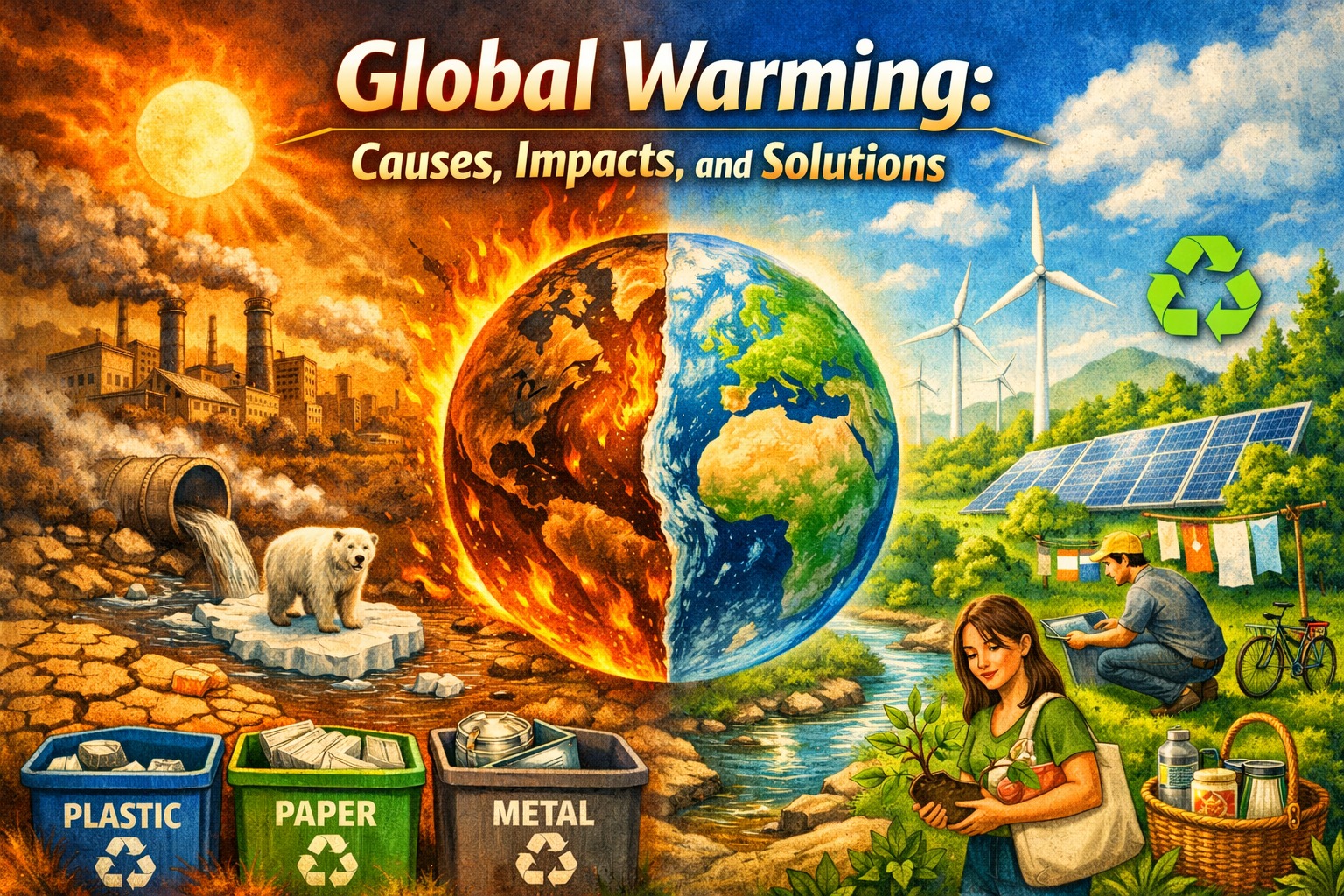
Global warming has become one of the most urgent challenges facing humanity today. Rising temperatures, unpredictable weather patterns, and environmental degradation are clear signs that the planet is changing rapidly. Understanding the causes, impacts, and solutions to global warming is essential for protecting the Earth and ensuring a sustainable future.
WHAT IS GLOBAL WARMING
Global warming refers to the long-term increase in the Earth’s average temperature due to human activities and natural processes. Although climate change has occurred naturally throughout history, the current rate of warming is faster than ever before. Scientists agree that human activity plays the largest role in accelerating this phenomenon.
The increase in greenhouse gases traps heat in the atmosphere, creating a “blanket effect” that prevents heat from escaping into space. As a result, the planet continues to warm year after year.
MAIN CAUSES OF GLOBAL WARMING
1.BURNING OF FOSSIL FUELS
Coal, oil, and natural gas are the primary sources of energy worldwide. When these fuels are burned for electricity, transportation, and industry, they release carbon dioxide into the atmosphere. This gas is one of the biggest contributors to the greenhouse effect.
2. DEFORESTATION
Forests absorb carbon dioxide and help regulate the climate. However, large-scale deforestation for agriculture, construction, and industry reduces the Earth’s ability to absorb carbon emissions. As trees disappear, more carbon remains in the atmosphere.
3. INDUSTRIAL AND AGRICULTURAL ACTIVITIES
Factories, livestock farming, and fertilizer use release methane and nitrous oxide, which are powerful greenhouse gases. These gases trap even more heat than carbon dioxide, worsening global warming.
4.EXCESSIVE CONSUMPTION AND WASTE
Modern lifestyles rely heavily on mass production and disposable products. Overconsumption leads to higher emissions and increased landfill waste, both of which contribute to climate change.
IMPACTS OF GLOBAL WARMING ON THE PLANET
1. EXTREME WEATHER EVENTS
Global warming intensifies hurricanes, floods, droughts, and heatwaves. These extreme events are becoming more frequent and destructive, affecting millions of people worldwide.
2. RISING SEA LEVELS
Melting glaciers and polar ice caps cause sea levels to rise. Coastal cities and island nations face the risk of flooding and displacement, threatening homes and livelihoods.
3. LOSS OF BIODIVERSITY
Many plant and animal species struggle to adapt to rapid temperature changes. As habitats disappear, species face extinction, disrupting ecosystems and food chains.
4. HEALTH RISKS FOR HUMANS
Air pollution, heat stress, and the spread of diseases are increasing due to climate change. Vulnerable communities are especially at risk, highlighting the social impact of global warming.
SOLUTIONS TO REDUCE GLOBAL WARMING
1. TRANSITION TO RENEWABLE ENERGY
Switching to solar, wind, and hydroelectric power can significantly reduce carbon emissions. Clean energy is becoming more affordable and accessible worldwide.
2.ENERGY EFFICIENCY AND CONSERVATION
Using energy-efficient appliances, reducing electricity consumption, and adopting sustainable transportation can lower emissions on a daily basis.
3. REFORESTATION AND CONSERVATION
Planting trees and protecting forests help absorb carbon dioxide and restore natural ecosystems. Community-based conservation efforts play a key role in long-term climate stability.
4. SUSTAINABLE LIFESTYLE CHOICES
Individuals can make a difference by reducing waste, recycling, choosing eco-friendly products, and supporting sustainable businesses.
5.GLOBAL COOPERATION AND POLICY
Governments and organizations must work together to create policies that limit emissions and promote sustainability. International agreements are essential for global progress.
CONCLUSION
Global warming is a complex but solvable problem. By understanding its causes and impacts, individuals and governments can take meaningful steps toward a healthier planet. Every action, no matter how small, contributes to the global effort to fight climate change. The future depends on decisions made today.