 English EN
  Indonesia ID

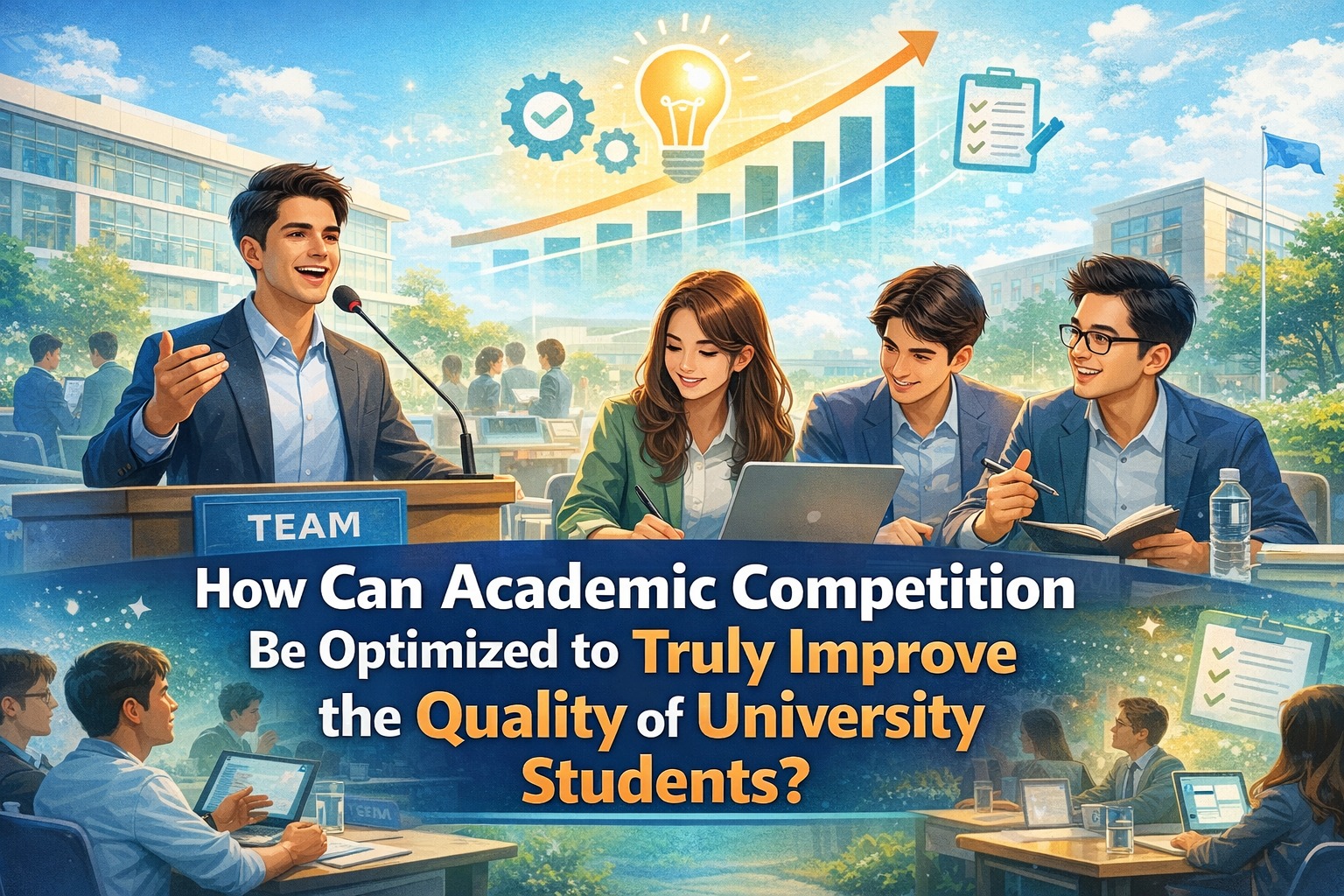
Academic competition is a central element of higher education. Universities frequently organize scholarship selections, research contests, innovation challenges, and GPA-based rankings to encourage excellence. However, competition alone does not automatically improve student outcomes. This leads to a crucial question: how can academic competition be optimized to truly improve the quality of university students?
To maximize its benefits, academic competition must be structured strategically, ethically, and inclusively. When designed properly, it can enhance academic performance, strengthen character, and prepare students for professional success.
Understanding Student Quality in Higher Education
Improving the quality of university students involves more than raising GPA scores.
True student quality includes:
- Strong critical thinking skills
- Effective communication abilities
- Emotional resilience
- Ethical behavior
- Adaptability and problem-solving skills
Therefore, academic competition should aim to develop well-rounded individuals rather than simply reward top performers.
Strategies to Optimize Academic Competition
1. Shift the Focus from Ranking to Growth
One of the most effective ways to optimize academic competition is to emphasize personal improvement rather than comparison.
Instead of highlighting only top-ranked students, universities can:
- Recognize progress and effort
- Provide constructive feedback
- Encourage self-reflection
When students compete against their previous performance rather than solely against peers, motivation becomes healthier and more sustainable.
2. Integrate Collaboration within Competition
Competition does not have to eliminate teamwork. Universities can design group-based competitions that require cooperation, communication, and shared responsibility.
For example:
- Team research projects
- Business case competitions
- Innovation challenges
This approach ensures that students develop both competitive drive and collaborative skills.
3. Promote Ethical Standards
To truly improve student quality, academic competition must prioritize integrity. Institutions should clearly communicate academic honesty policies and emphasize fair play.
Rewarding ethical behavior alongside achievement fosters strong character development and long-term professionalism.
4. Provide Mental Health Support
Excessive pressure can undermine the benefits of competition.
Universities should create supportive environments by offering:
- Academic counseling
- Stress management workshops
- Open communication with lecturers
When students feel supported, they are more likely to thrive in competitive environments without compromising their well-being.
5. Align Competition with Real-World Skills
Optimized academic competition should mirror real-world challenges. Instead of focusing only on theoretical exams, universities can design competitions that emphasize:
- Practical problem-solving
- Industry-based case studies
- Leadership and communication skills
This alignment ensures that competition enhances workforce readiness and practical competence.
6. Ensure Equal Opportunities
Fair competition requires equal access to resources. Universities should provide mentoring, training, and academic support to all students, including those from diverse backgrounds.
When opportunities are inclusive, competition becomes a tool for empowerment rather than inequality.
The Role of Educators and Institutions
Lecturers and administrators play a key role in shaping competitive culture. By promoting encouragement instead of excessive pressure, they can transform competition into a constructive learning experience.
Educational leaders should continuously evaluate whether competitive systems:
- Improve learning outcomes
- Support student well-being
- Encourage ethical behavior
- Foster personal growth
Regular evaluation ensures that competition remains beneficial and aligned with educational goals.
Conclusion
Academic competition can significantly enhance the quality of university students—but only when optimized thoughtfully. By focusing on growth, collaboration, ethical standards, mental health support, and real-world relevance, universities can transform competition into a powerful developmental tool.
Ultimately, the goal of academic competition should not be to create a small group of winners, but to elevate the overall quality of students. When implemented strategically, competition becomes a catalyst for academic excellence, personal development, and long-term success.