 English EN
  Indonesia ID

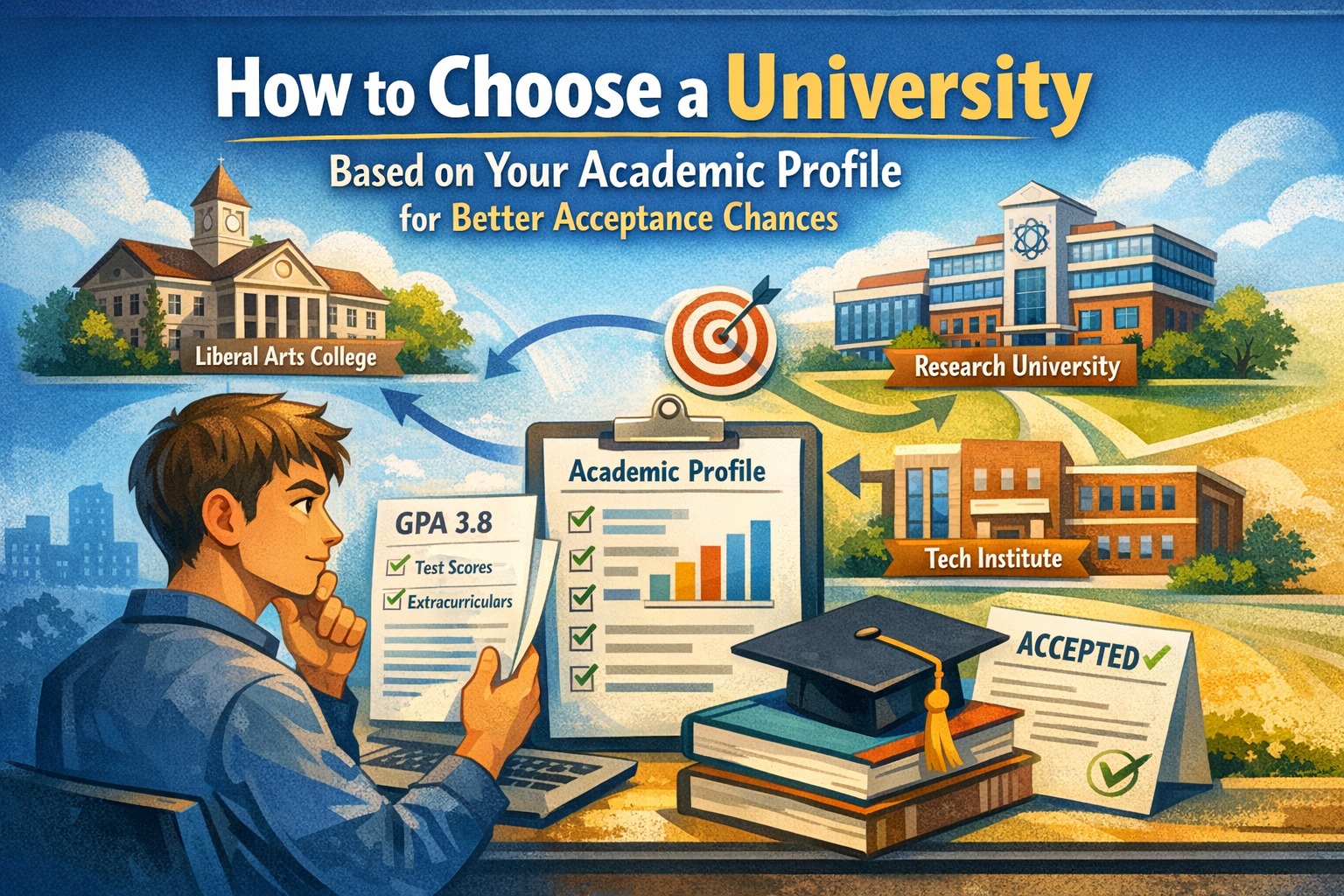
Choosing the right university is one of the most important decisions in a student’s academic journey. Many applicants focus only on rankings or popularity, but the smartest approach is to align your choice with your academic profile. This strategy not only increases your chances of acceptance but also ensures you thrive once admitted.
Your academic profile includes your grades, achievements, skills, and learning strengths. When you understand how these factors match with university expectations, you can make more realistic and strategic decisions. This article will guide you step by step to choose a university that fits your academic background effectively.
UNDERSTANDING YOUR ACADEMIC PROFILE
Your academic profile is more than just your GPA. It reflects your overall performance, consistency, subject strengths, and even extracurricular involvement. Universities evaluate applicants holistically, meaning they consider multiple aspects beyond numbers.
Take time to analyze your strengths and weaknesses. Identify which subjects you excel in and where you may need improvement. This self-awareness helps you determine which programs and universities are the best fit for your abilities.
You should also consider your learning style and academic interests. Some students perform better in research-based environments, while others excel in practical or project-based systems. Matching this with the university’s teaching approach is crucial.
RESEARCHING UNIVERSITY REQUIREMENTS
Each university has its own admission standards and expectations. Some prioritize high academic scores, while others value creativity, leadership, or extracurricular achievements. Understanding these differences is essential for making the right choice.
Visit official university websites and review their admission criteria carefully. Look at minimum grade requirements, required documents, and selection processes. This will give you a clear picture of where you stand.
You should also research acceptance rates and typical student profiles. This helps you categorize universities into realistic, target, and ambitious options based on your academic level.
MATCHING YOUR STRENGTHS WITH UNIVERSITY PROGRAMS
Not all universities excel in every field. Some are stronger in science and technology, while others specialize in arts, business, or social sciences. Choosing a university that aligns with your strengths increases your chances of success.
Evaluate the curriculum and program structure offered by each university. Make sure it supports your academic interests and career goals. A well-matched program will keep you motivated and engaged.
It is also important to consider faculty expertise and available resources. Strong academic support can significantly enhance your learning experience and future opportunities.
SETTING REALISTIC AND STRATEGIC OPTIONS
A smart application strategy includes a balanced list of universities. You should apply to a mix of safe, target, and reach schools based on your academic profile.
Safe universities are those where your qualifications exceed the requirements. Target universities are where your profile closely matches the average admitted student. Reach universities are more competitive but still worth trying.
This balanced approach maximizes your acceptance chances while still giving you the opportunity to aim high. Avoid applying only to highly competitive universities without backup options.
EVALUATING LONG TERM BENEFITS
Choosing a university is not just about getting accepted. It is about ensuring long-term academic and career success. Consider factors such as graduation rates, internship opportunities, and career support services.
Look into alumni success and industry connections. Universities with strong networks can open doors to internships and job opportunities after graduation.
You should also think about personal growth. A university that matches your academic profile will provide a supportive environment where you can develop confidence and skills effectively.
CONCLUSION
Choosing a university based on your academic profile is a strategic decision that can significantly improve your acceptance chances. By understanding your strengths, researching requirements, and making realistic choices, you can create a strong and effective application plan.
Remember that the best university is not always the most famous one, but the one that fits you best. When your academic ability aligns with the university’s expectations, you are more likely to succeed both during your studies and in your future career.