 English EN
  Indonesia ID

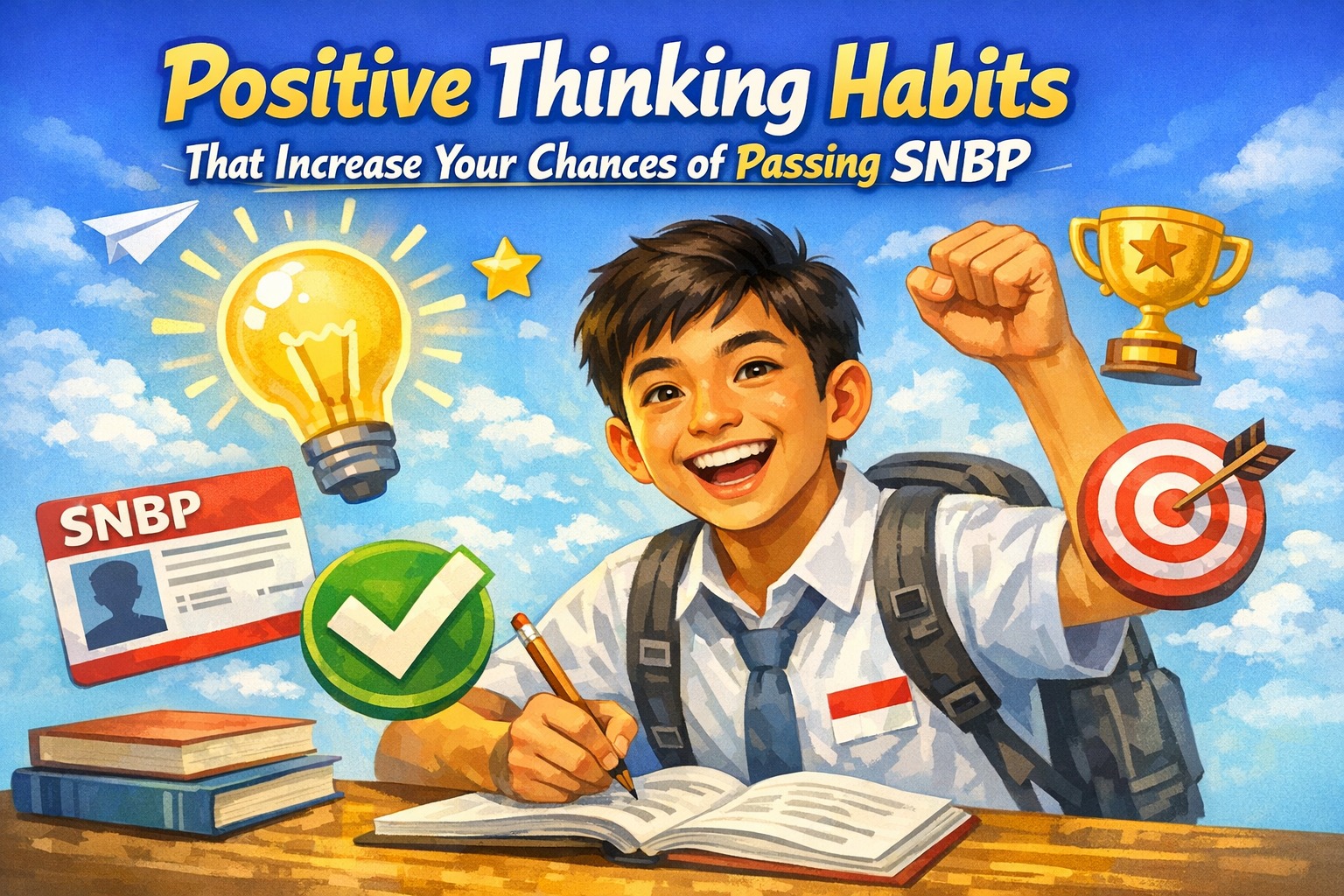
Positive thinking is more than just staying optimistic—it is a practical habit that shapes how students respond to challenges during SNBP preparation. Students who consistently think positively tend to manage stress better, stay motivated longer, and approach problems with a solution-oriented mindset. This mental habit becomes a powerful asset in a highly competitive selection process.
In SNBP, where academic performance and consistency are key, positive thinking helps students maintain emotional stability. Instead of being overwhelmed by pressure, they focus on what they can control and improve. This mindset allows them to perform at their best and increases their chances of success.
FOCUSING ON SOLUTIONS INSTEAD OF PROBLEMS
Students who develop the habit of focusing on solutions are less likely to get stuck in negative thinking. When they face academic challenges or feel uncertain about their chances, they immediately shift their attention to what can be improved or fixed.
This approach creates a sense of control. Rather than blaming circumstances or comparing themselves excessively with others, they actively seek ways to enhance their performance and portfolio. This proactive attitude leads to continuous progress.
Over time, this habit trains the brain to think constructively. It reduces anxiety and builds confidence because students always have a plan to move forward, no matter the situation.
PRACTICING GRATITUDE TO STAY MOTIVATED
Gratitude is a simple but powerful habit that helps students stay grounded. By appreciating what they already have, such as supportive teachers, learning opportunities, and their current achievements, students develop a more balanced perspective.
This mindset prevents feelings of inadequacy that often arise during intense competition. Instead of focusing on what they lack, students recognize their strengths and use them as motivation to keep improving.
Gratitude also boosts emotional well-being. When students feel more positive about their journey, they are more likely to stay consistent and committed to their SNBP preparation.
VISUALIZING SUCCESS FOR STRONGER BELIEF
Visualization is a technique where students imagine themselves successfully passing SNBP and entering their dream university. This habit strengthens belief and creates a clear mental image of their goals.
When students visualize success regularly, it influences their actions. They become more disciplined, focused, and determined because they feel connected to their future achievements.
This habit also reduces self-doubt. By repeatedly seeing themselves succeed in their minds, students build the confidence needed to perform well in reality.
LIMITING NEGATIVE INFLUENCES
The environment plays a significant role in shaping a student’s mindset. Students who surround themselves with negativity are more likely to feel discouraged and lose motivation.
Positive thinking habits include being selective about the information and people they engage with. Students avoid toxic comparisons, discouraging comments, and unnecessary pressure from social media.
By creating a positive environment, students can maintain their focus and energy. This helps them stay productive and emotionally stable throughout the SNBP process.
SELF-ENCOURAGEMENT DURING DIFFICULT TIMES
Every student experiences moments of doubt and fatigue. Positive thinkers develop the habit of encouraging themselves instead of engaging in negative self-talk.
They replace thoughts like “I can’t do this” with “I will improve step by step.” This shift in internal dialogue makes a significant difference in how they handle challenges.
Self-encouragement builds resilience. It allows students to recover quickly from setbacks and continue their preparation with renewed energy.
STAYING CONSISTENT WITH POSITIVE ROUTINES
Positive thinking is not a one-time action but a daily habit. Students who succeed in SNBP integrate positive routines into their everyday lives, such as setting intentions, reflecting on progress, and maintaining a balanced schedule.
Consistency in these routines strengthens their mindset over time. It ensures that positivity becomes a natural part of their thinking pattern rather than something forced.
With consistent habits, students can maintain stability even during stressful periods. This gives them an advantage in sustaining long-term preparation.
BELIEVING IN PERSONAL GROWTH
Positive thinkers believe that their abilities can improve with effort. They do not see their current performance as a fixed limitation but as a starting point for growth.
This belief encourages them to take action. They are more willing to try new strategies, seek help, and learn from mistakes without fear of failure.
As a result, students continuously evolve. Their progress becomes visible, which further strengthens their confidence and motivation.
MANAGING STRESS WITH A POSITIVE APPROACH
Stress is inevitable during SNBP preparation, but how students respond to it makes a difference. Positive thinkers manage stress by focusing on solutions, maintaining perspective, and taking care of their mental health.
They understand that stress is part of the process and not a sign of failure. This mindset helps them stay calm and composed during critical moments.
By handling stress effectively, students can maintain their performance and avoid burnout, which is crucial for long-term success.
CELEBRATING SMALL ACHIEVEMENTS
Acknowledging small achievements is an important positive thinking habit. Students who celebrate their progress, no matter how small, build momentum and motivation.
This habit reinforces the idea that every step forward matters. It keeps students engaged in their journey and prevents feelings of stagnation.
Over time, these small wins accumulate into significant progress. Students become more confident and prepared for the SNBP selection.
MAINTAINING HOPE AND OPTIMISM
Hope and optimism are essential for sustaining effort. Students who believe that their hard work will pay off are more likely to stay committed until the end.
Even when facing uncertainty, they maintain a positive outlook. This helps them stay focused on their goals rather than being distracted by fear or doubt.
Optimism creates a strong mental foundation. It allows students to approach SNBP with confidence and determination, increasing their chances of success.