 English EN
  Indonesia ID

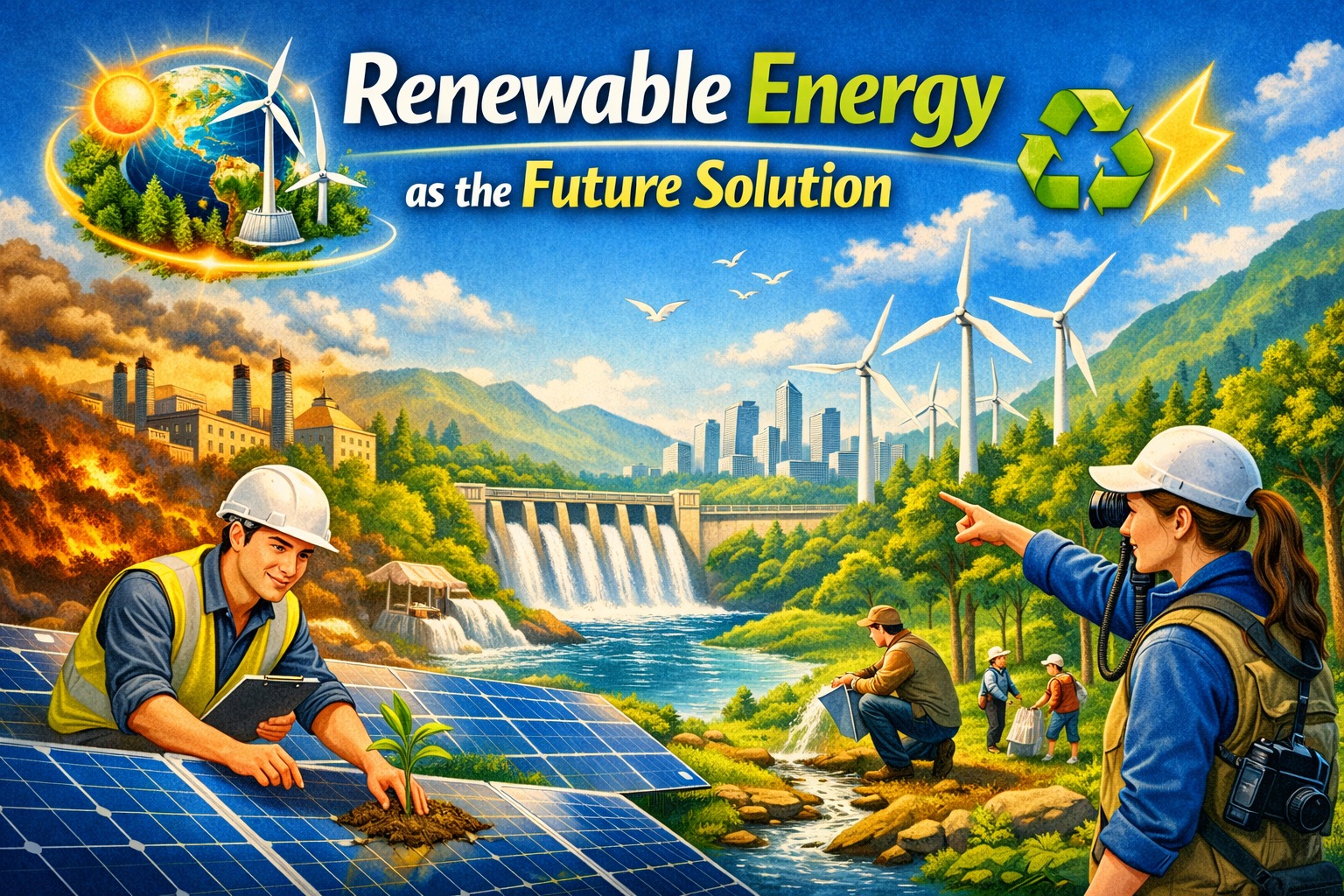
The world is facing a critical moment in history. Rising energy demand, climate change, and limited fossil fuel reserves have pushed governments, businesses, and communities to rethink how energy is produced and consumed. Renewable energy has emerged as a powerful solution that promises sustainability, economic growth, and environmental protection. This article explores why renewable energy is becoming the future of global power.
WHAT IS RENEWABLE ENERGY
Renewable energy refers to energy generated from natural resources that replenish themselves naturally over time. Unlike fossil fuels such as coal, oil, and natural gas, renewable sources do not run out and produce significantly fewer emissions.
Common renewable energy sources include solar power, wind energy, hydropower, geothermal energy, and biomass. These resources harness natural processes like sunlight, wind movement, and water flow to produce electricity and heat.
WHY THE WORLD NEEDS RENEWABLE ENERGY
Global energy consumption continues to rise as populations grow and industries expand. Traditional energy sources are not only limited but also contribute heavily to greenhouse gas emissions. These emissions drive climate change, which leads to extreme weather, rising sea levels, and environmental degradation.
Renewable energy offers a cleaner alternative. It reduces carbon emissions, lowers pollution levels, and helps countries meet international climate goals. Transitioning to renewable power is no longer optional—it is essential for long-term survival.
ENVIRONMENTAL BENEFITS OF RENEWABLE ENERGY
One of the strongest reasons to adopt renewable energy is its positive environmental impact. Unlike fossil fuels, renewable energy production produces little to no greenhouse gases.
Switching to renewable energy helps:
* Reduce air and water pollution
* Slow global warming
* Protect ecosystems and wildlife
* Preserve natural resources for future generations
Cleaner air also leads to improved public health, reducing respiratory diseases and healthcare costs.
ECONOMIC ADVANTAGES AND JOB CREATION
Renewable energy is not only environmentally friendly but also economically beneficial. The renewable energy sector is one of the fastest-growing industries in the world.
Investment in renewable energy creates millions of jobs in manufacturing, installation, maintenance, and research. Solar panel technicians, wind turbine engineers, and energy analysts are increasingly in demand.
In addition, renewable energy reduces long-term electricity costs. Once infrastructure is installed, the fuel—sunlight, wind, or water—is free.
TECHNOLOGICAL INNOVATION AND ENERGY EFFICIENCY
Advances in technology have made renewable energy more efficient and affordable than ever before. Solar panels are cheaper, wind turbines are more powerful, and battery storage technology is rapidly improving.
Energy storage plays a key role in solving the challenge of intermittent power supply. Modern batteries allow energy to be stored during peak production and used when demand is high, ensuring a stable energy supply.
Smart grids and artificial intelligence are also helping optimize energy distribution and consumption, making renewable energy more reliable and efficient.
CHALLENGES OF TRANSITIONING TO RENEWABLE ENERGY
Despite its benefits, the transition to renewable energy still faces several challenges.
Initial installation costs can be high, especially for developing countries. Infrastructure upgrades and policy changes are also required to support large-scale adoption. Additionally, renewable energy production depends on weather conditions, which can affect reliability without proper storage solutions.
However, continuous innovation and global cooperation are steadily overcoming these barriers.
THE ROLE OF GOVERNMENTS AND COMMUNITIES
Governments play a major role in accelerating renewable energy adoption. Policies such as tax incentives, subsidies, and renewable energy targets encourage businesses and households to switch to cleaner energy.
Communities and individuals also contribute by adopting solar panels, supporting green initiatives, and reducing energy consumption. Collective action makes a significant difference in driving the renewable energy movement forward.
A SUSTAINABLE FUTURE POWERED BY RENEWABLE ENERGY
Renewable energy is more than just an alternative—it is the foundation of a sustainable future. As technology advances and awareness grows, the shift toward renewable power will continue to accelerate.
By embracing renewable energy today, we can create a cleaner environment, stronger economies, and a healthier planet for future generations.