 English EN
  Indonesia ID

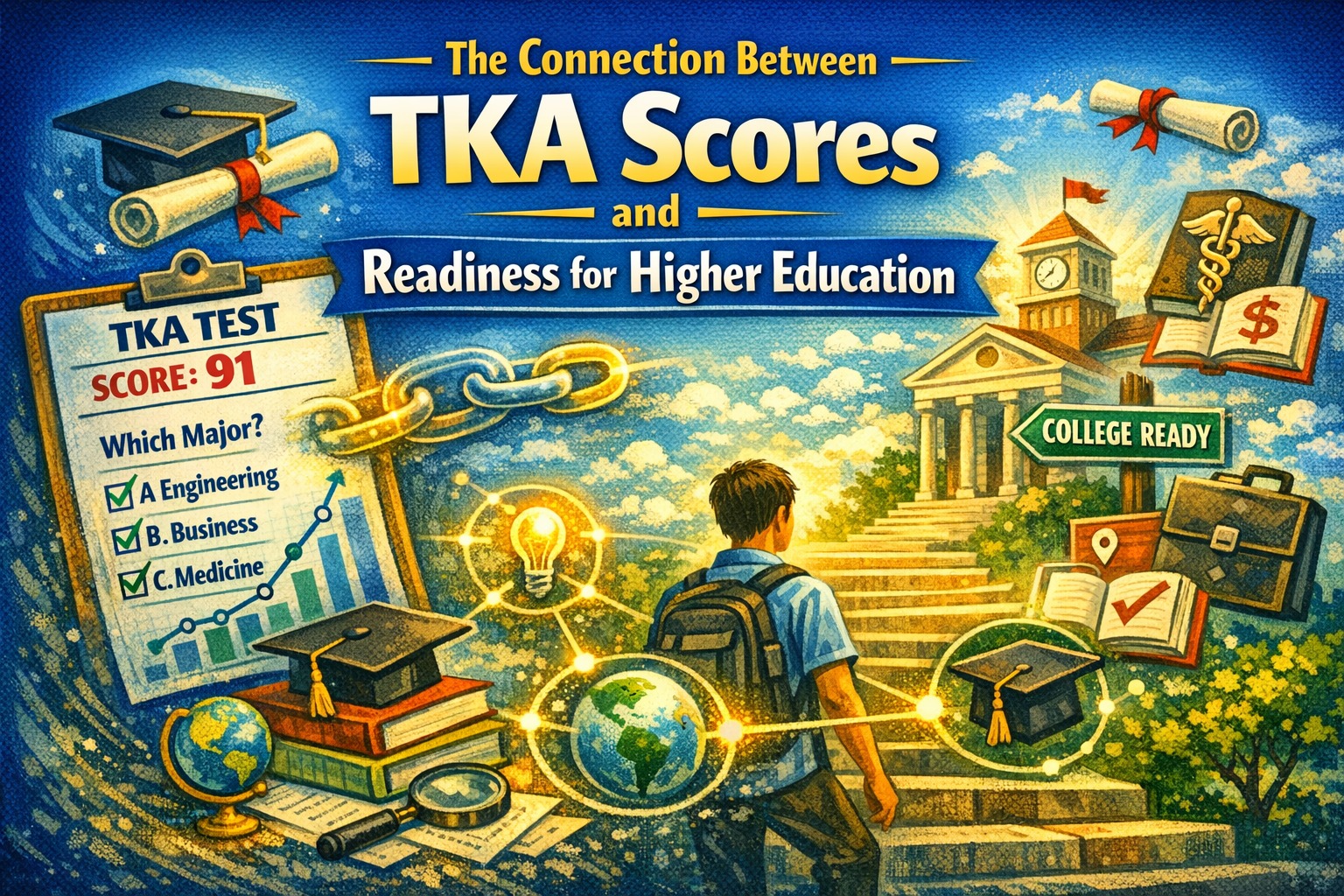
TKA scores have become an important indicator in determining whether students are ready to face the demands of higher education. As a standardized academic assessment, the Test Kompetensi Akademik evaluates essential skills such as critical thinking, comprehension, and problem-solving. These abilities are fundamental for success in university, where students are expected to engage in deeper and more independent learning.
In an increasingly competitive academic environment, universities need reliable ways to measure student preparedness. TKA scores provide a consistent and objective benchmark that helps institutions identify applicants who are capable of handling academic challenges. By analyzing these scores, universities can ensure that students admitted into their programs are equipped with the necessary foundation for higher education.
UNDERSTANDING READINESS FOR HIGHER EDUCATION
Readiness for higher education involves more than just basic knowledge. It includes the ability to think critically, manage time effectively, and adapt to complex learning environments. TKA scores are designed to measure these competencies, making them a valuable tool in assessing whether a student is truly prepared for university life.
Another important aspect of readiness is the ability to apply knowledge in new and challenging situations. TKA assessments focus on analytical reasoning and problem-solving, which reflect how well students can use their understanding in practical contexts. This is crucial for higher education, where learning often goes beyond memorization.
Moreover, readiness also involves academic discipline and consistency. Students who achieve strong TKA scores often demonstrate effective study habits and a commitment to learning. These qualities are essential for succeeding in a demanding academic environment.
HOW TKA SCORES INDICATE ACADEMIC PREPAREDNESS
TKA scores provide clear insights into a student’s academic capabilities. By evaluating performance across different subjects, the test highlights strengths and weaknesses in key areas. This information helps universities determine whether an applicant has the necessary skills to succeed in their chosen field.
In addition, TKA scores allow for fair comparisons among students from diverse educational backgrounds. Since schools may have different grading systems, it can be difficult to assess applicants equally. TKA creates a standardized measure that ensures fairness in evaluating academic preparedness.
Furthermore, strong TKA scores often correlate with a student’s ability to handle rigorous coursework. Students who perform well on the test are more likely to adapt to university-level expectations, participate actively in class, and complete assignments effectively. This makes TKA an important predictor of academic success.
THE ROLE OF TKA SCORES IN UNIVERSITY ADMISSIONS
Universities rely on TKA scores as part of their admission criteria to ensure that they select students who are ready for higher education. These scores serve as a filtering tool that helps institutions identify candidates who meet their academic standards. This is especially important when dealing with a large number of applications.
Beyond filtering, TKA scores help maintain the quality of academic programs. By admitting students with strong foundational skills, universities can ensure that their courses remain challenging and effective. This contributes to better learning outcomes and overall institutional performance.
Additionally, TKA scores enhance transparency in the admission process. Applicants understand the importance of achieving certain scores, which encourages them to prepare thoroughly. This clarity benefits both students and universities by creating a fair and structured selection system.
BENEFITS OF TKA SCORES FOR STUDENTS
For students, TKA scores provide a clear measure of their academic readiness. This helps them understand their strengths and identify areas that need improvement before entering university. A strong score can also boost confidence and increase the chances of being accepted into competitive programs.
Preparing for TKA also helps students develop important academic skills. The process encourages deeper understanding, critical thinking, and effective problem-solving. These skills are not only useful for the test but also for future studies in higher education.
Moreover, TKA scores can guide students in making informed decisions about their academic paths. By analyzing their performance, they can choose study programs that align with their abilities. This leads to better academic performance and a more fulfilling university experience.
LIMITATIONS AND CHALLENGES OF TKA SCORES
Despite their importance, TKA scores have certain limitations. Standardized tests may not fully capture a student’s overall potential, including creativity, leadership, and communication skills. These aspects are also important for success in higher education.
Another challenge is the impact of external factors on test performance. Some students may experience anxiety or lack access to adequate preparation resources, which can affect their results. This means that TKA scores should be interpreted with caution.
Therefore, it is essential for universities to use TKA scores alongside other evaluation criteria. By considering academic records, extracurricular activities, and personal achievements, institutions can gain a more comprehensive understanding of each applicant’s readiness.
THE FUTURE OF TKA IN HIGHER EDUCATION
As education systems continue to evolve, the role of TKA scores is expected to grow and adapt. Advances in technology may lead to more innovative testing methods that provide deeper insights into student abilities. These developments can improve the accuracy and fairness of academic assessments.
Universities are also moving toward more holistic admission approaches. While TKA scores remain important, they are increasingly combined with other factors to create a balanced evaluation system. This ensures that students are assessed not only for their academic skills but also for their overall potential.
Ultimately, the connection between TKA scores and readiness for higher education will remain strong. When used effectively, these scores help universities select capable students and support them in achieving academic success.