 English EN
  Indonesia ID

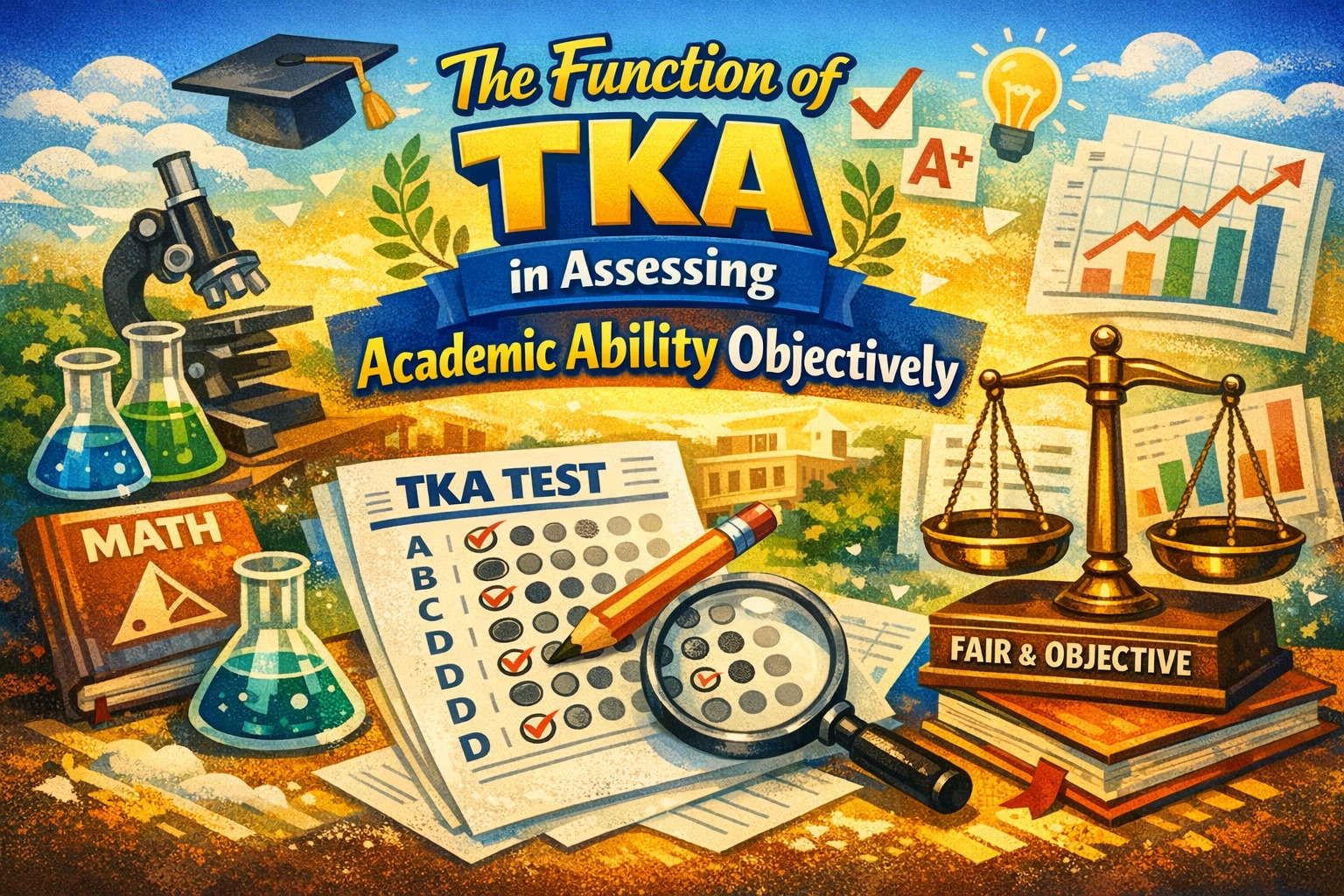
The Academic Competency Test, widely known as TKA, plays a vital role in assessing students’ academic abilities in an objective and measurable manner. In an education system that demands fairness and accuracy, relying solely on subjective evaluations can lead to inconsistencies. TKA provides a standardized approach that ensures every student is assessed based on the same criteria, regardless of their background or school environment.
Moreover, objective assessment through TKA helps create a more transparent and accountable education system. By using structured evaluation methods, educators can obtain reliable data about student performance. This data not only reflects individual achievement but also provides insights into the overall effectiveness of teaching and learning processes.
ENSURING FAIR AND STANDARDIZED EVALUATION
One of the primary functions of TKA is to ensure fair and standardized evaluation for all students. Without a consistent assessment system, measuring academic ability can vary significantly between institutions. TKA eliminates this issue by applying uniform standards that all students must meet.
Fair evaluation is essential in maintaining trust within the education system. When students are assessed objectively, they are more likely to accept the results and feel motivated to improve. This fairness also ensures that achievements are recognized based on merit rather than external factors.
In addition, standardized evaluation allows for accurate comparisons of student performance across different regions and schools. This helps educators and policymakers identify strengths and weaknesses within the system, leading to more effective improvements in education quality.
PROVIDING ACCURATE MEASUREMENT OF STUDENT COMPETENCE
TKA serves as a reliable tool for measuring student competence accurately. Through well designed questions and structured testing methods, it evaluates various aspects of academic ability. This ensures that the assessment reflects true student understanding rather than surface level knowledge.
Accurate measurement is crucial for identifying both strengths and areas that need improvement. With clear results, teachers can provide targeted support to help students enhance their performance. This leads to more effective learning and better academic outcomes.
Furthermore, accurate assessment helps students gain a deeper understanding of their own abilities. By recognizing their performance levels, they can set realistic goals and work towards achieving them. This self awareness is an important factor in academic success.
REDUCING SUBJECTIVITY IN ASSESSMENT
Another important function of TKA is reducing subjectivity in academic assessment. Traditional evaluation methods often involve personal judgment, which can lead to bias. TKA minimizes this risk by using objective criteria and standardized scoring systems.
Reducing subjectivity ensures that all students are treated equally in the evaluation process. This is particularly important in diverse educational environments where differences in teaching styles and expectations may exist. TKA creates a level playing field for all learners.
Moreover, objective assessment helps maintain consistency over time. As students progress through different levels of education, they are evaluated using the same standards. This consistency supports reliable tracking of academic development and progress.
SUPPORTING DATA DRIVEN EDUCATIONAL DECISIONS
TKA provides valuable data that supports data driven decision making in education. The results offer detailed insights into student performance, allowing educators to identify trends and patterns. This information is essential for improving teaching strategies and curriculum design.
With access to accurate data, schools can implement targeted interventions to address specific challenges. For example, if students consistently perform poorly in a particular subject, additional resources can be allocated to improve understanding. This ensures that educational improvements are based on real needs.
In addition, policymakers can use TKA data to evaluate the effectiveness of educational programs. By analyzing results over time, they can determine whether current strategies are successful or require adjustment. This continuous evaluation process helps maintain high standards in education.
ENHANCING TRANSPARENCY AND ACCOUNTABILITY
Transparency and accountability are key components of a strong education system, and TKA contributes significantly to both. By providing clear and measurable results, TKA ensures that the assessment process is open and understandable for all stakeholders.
Transparent evaluation helps build trust among students, parents, and educators. When assessment criteria and results are clearly communicated, stakeholders are more likely to support the system. This creates a positive and collaborative learning environment.
Additionally, accountability is strengthened when performance data is available. Schools and educators can be held responsible for student outcomes, encouraging continuous improvement. This focus on accountability helps ensure that education systems remain effective and responsive to student needs.
CONCLUSION
In conclusion, TKA plays a crucial role in assessing academic ability objectively. It ensures fair and standardized evaluation, provides accurate measurement of student competence, reduces subjectivity, supports data driven decisions, and enhances transparency and accountability.
As education systems continue to advance, the importance of objective assessment tools like TKA will only increase. By implementing TKA effectively, educators can create a more reliable, fair, and high quality learning environment that benefits all students.