 English EN
  Indonesia ID

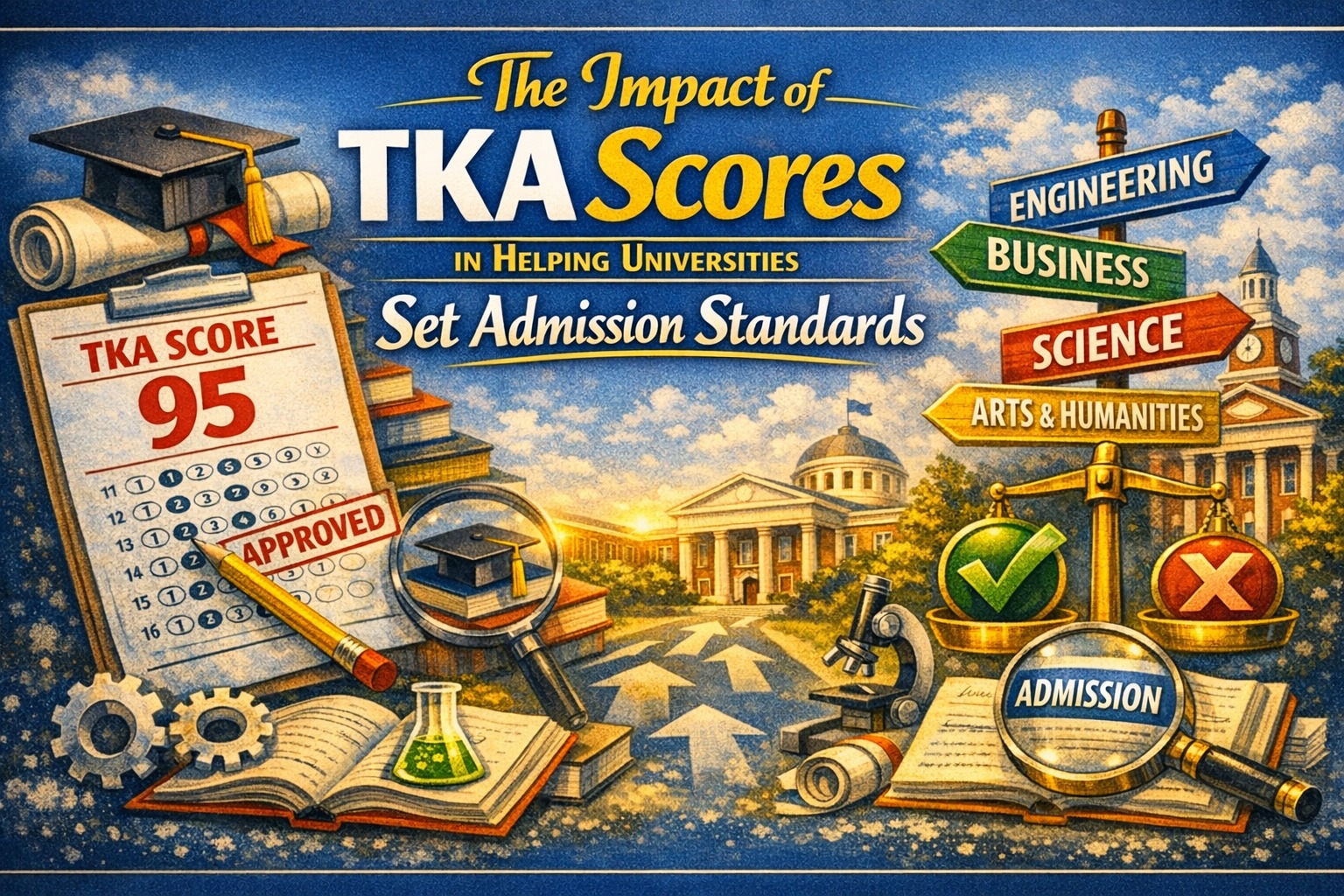
TKA scores have a significant impact on how students are placed into majors in higher education. As a standardized academic assessment, the Test Kompetensi Akademik measures essential skills such as analytical reasoning, subject understanding, and problem-solving ability. These competencies are closely related to the academic demands of different fields of study, making TKA scores a valuable reference in determining suitable major placement.
In a competitive university environment, selecting the right major is crucial for both student success and institutional performance. TKA scores provide objective data that helps universities match students with programs that align with their abilities. By using these scores effectively, institutions can ensure that students are placed in majors where they have the highest potential to succeed.
UNDERSTANDING MAJOR PLACEMENT IN HIGHER EDUCATION
Major placement refers to the process of assigning students to specific academic programs based on their abilities, interests, and qualifications. This process is essential for ensuring that students are prepared to meet the academic challenges of their chosen field. TKA scores play an important role by providing measurable indicators of academic readiness.
Another key aspect of major placement is aligning student capabilities with program requirements. Different majors demand different skill sets, such as strong analytical skills for engineering or communication skills for social sciences. TKA scores help universities identify these strengths and make appropriate placement decisions.
Furthermore, effective major placement contributes to overall academic success. When students are placed in programs that match their abilities, they are more likely to perform well and remain motivated. This alignment reduces the risk of academic difficulties and program changes.
HOW TKA SCORES INFLUENCE MAJOR SELECTION
TKA scores provide valuable insights into a student’s strengths across various subjects. Universities use this information to guide students toward majors that suit their academic profile. For example, high scores in mathematics and logic may indicate readiness for science and technology programs.
In addition, TKA scores help universities set specific requirements for certain majors. Competitive programs often require higher scores in relevant subjects, ensuring that only qualified students are admitted. This approach maintains the quality and rigor of academic programs.
Moreover, using TKA scores in major selection helps prevent mismatches between students and their chosen fields. When students enter programs aligned with their abilities, they are more likely to succeed and complete their studies. This benefits both the students and the institution.
THE ROLE OF TKA SCORES IN STUDENT SUCCESS
Student success in higher education is closely linked to proper major placement, and TKA scores support this process. Students who are placed in suitable programs based on their scores tend to perform better academically. They can understand course material more easily and engage more actively in learning.
Another advantage is increased confidence among students. When individuals know that their placement is based on their demonstrated abilities, they feel more prepared to face academic challenges. This confidence contributes to a positive and productive learning experience.
Additionally, proper placement reduces the likelihood of students changing majors or dropping out. By ensuring that students are well-matched to their programs from the beginning, universities can improve retention rates and overall academic outcomes.
BENEFITS OF TKA SCORES FOR UNIVERSITIES AND STUDENTS
For universities, TKA scores provide a reliable method for assigning students to appropriate majors. This helps maintain academic standards and ensures that programs are filled with capable students. It also simplifies the decision-making process during admissions.
For students, TKA scores offer guidance in choosing the right academic path. By understanding their strengths and weaknesses, they can make informed decisions about their future. This leads to greater satisfaction and better performance in their studies.
Moreover, TKA scores encourage students to develop relevant skills before entering university. The preparation process helps them build a strong academic foundation, which is essential for success in any major.
CHALLENGES IN USING TKA SCORES FOR MAJOR PLACEMENT
Despite their usefulness, TKA scores should not be the only factor in determining major placement. Personal interests, career goals, and individual preferences also play a crucial role. A student may have high scores in a subject but may not be passionate about pursuing it further.
Another challenge is that test results may not fully reflect a student’s potential. Factors such as test anxiety or limited preparation can influence performance. This means that relying solely on TKA scores may lead to incomplete assessments.
Therefore, universities should adopt a balanced approach by combining TKA scores with other evaluation criteria. This ensures that students are placed in majors that align not only with their abilities but also with their interests and aspirations.
THE FUTURE OF TKA SCORES IN MAJOR PLACEMENT
As higher education continues to evolve, the role of TKA scores in major placement is expected to become more advanced. Technological developments may lead to more adaptive assessments that provide deeper insights into student abilities. This can improve the accuracy of placement decisions.
Universities are also exploring more flexible systems that consider multiple factors in major assignment. While TKA scores remain important, they are increasingly integrated with other indicators such as academic records and personal achievements. This creates a more comprehensive evaluation process.
Ultimately, TKA scores will continue to play a key role in shaping major placement in higher education. When used effectively, they help universities guide students toward suitable programs, ensuring both academic success and long-term career development.