 English EN
  Indonesia ID

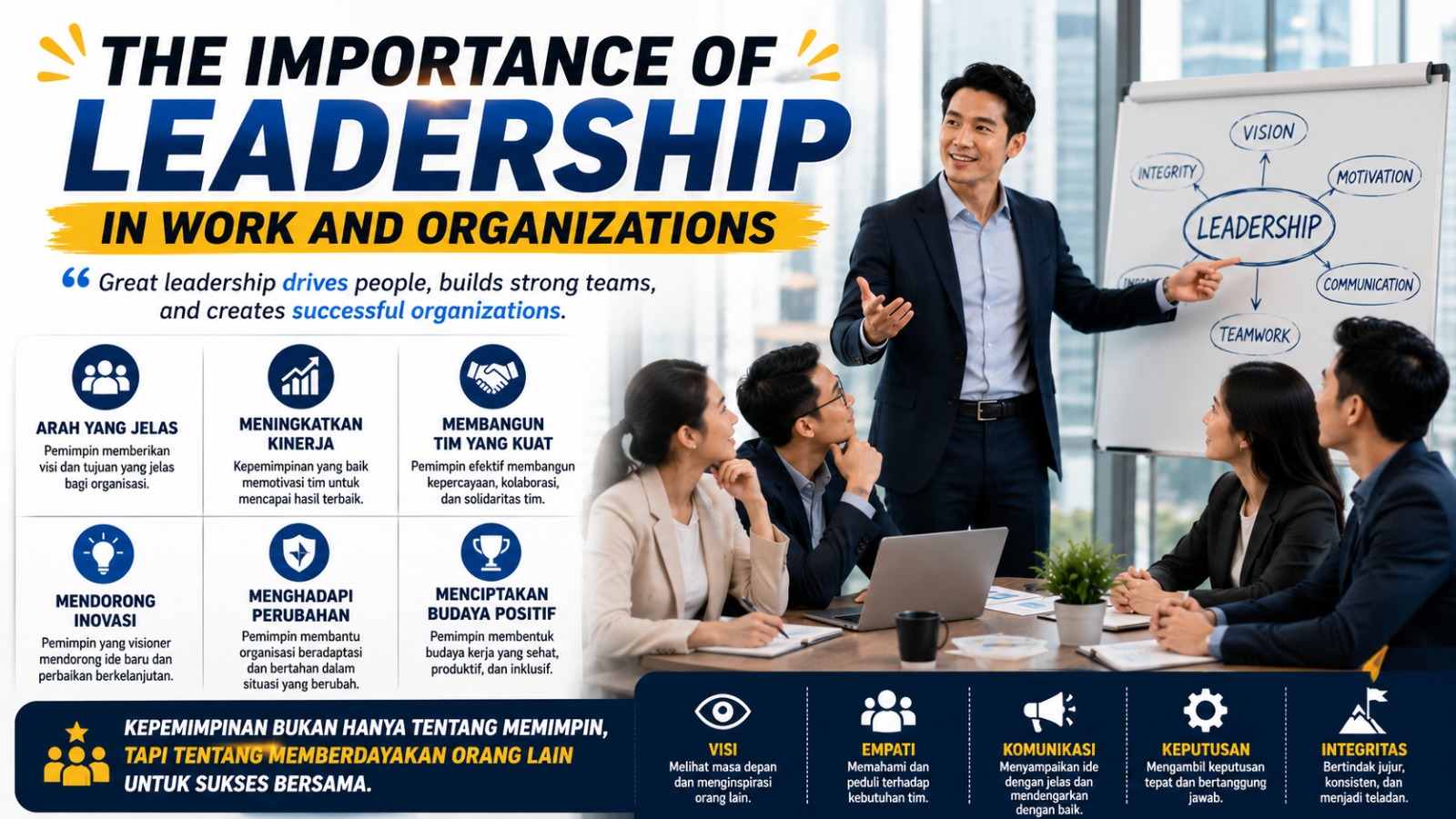
Leadership is one of the most important factors in the success of a workplace or organization. A strong leader can guide employees, create clear goals, and build a productive environment where people feel motivated to perform their best. Without effective leadership, organizations may struggle with poor communication, low morale, and lack of direction.
 0-8888-9999-64
 pmb.stekom.ac.id/2727
In modern workplaces, leadership is no longer only about authority or control. It is about inspiring people, encouraging collaboration, and helping teams adapt to challenges and changes. Good leadership can improve both organizational performance and employee satisfaction, making it essential for long-term success.
UNDERSTANDING THE ROLE OF LEADERSHIP
Leadership is the ability to influence and guide individuals or groups toward achieving common goals. Leaders are responsible for making decisions, solving problems, and ensuring that team members work together effectively.
In organizations, leaders provide direction and help employees understand the company’s vision and mission. They also create strategies that support growth and productivity. Effective leadership helps organizations remain focused and organized even during difficult situations.
A good leader not only manages tasks but also supports and motivates employees to achieve their full potential.
IMPROVING COMMUNICATION IN THE WORKPLACE
One of the main benefits of leadership is better communication within teams and organizations. Strong leaders communicate goals, expectations, and feedback clearly to employees.
Open communication helps reduce misunderstandings and creates a more comfortable work environment. Employees who feel heard and informed are usually more engaged and productive.
Leaders also encourage teamwork by promoting discussions, listening to suggestions, and resolving conflicts professionally. Good communication strengthens trust between employees and management.
INCREASING EMPLOYEE MOTIVATION
Leadership plays a major role in employee motivation. Leaders who appreciate hard work and provide encouragement can increase team morale and productivity.
Employees are more motivated when they feel valued and supported by their leaders. Positive leadership can inspire people to work harder, improve their skills, and contribute more effectively to organizational goals.
Motivated employees are also more likely to remain loyal to the company and maintain a positive attitude in the workplace.
SUPPORTING TEAMWORK AND COLLABORATION
Successful organizations rely heavily on teamwork. Effective leaders create environments where employees can collaborate, share ideas, and support one another.
Leadership encourages unity by helping teams focus on shared objectives rather than individual interests. Leaders also help solve conflicts and maintain healthy relationships between team members.
Strong collaboration often leads to higher creativity, better problem-solving, and improved overall performance within organizations.
HELPING ORGANIZATIONS HANDLE CHANGE
Workplaces and organizations constantly face changes such as technological advancements, market competition, and economic challenges. Leadership is important because it helps organizations adapt to these changes effectively.
Good leaders remain calm during uncertainty and guide employees through transitions. They communicate plans clearly and encourage teams to stay focused and flexible.
Organizations with strong leadership are usually better prepared to face challenges and take advantage of new opportunities.
DEVELOPING EMPLOYEE POTENTIAL
Leadership is essential for employee development and growth. Effective leaders provide guidance, mentorship, and opportunities for learning.
Employees who receive support from leaders often become more confident and skilled in their roles. Leadership also helps identify employee strengths and encourages personal and professional improvement.
When organizations invest in leadership development, they create stronger teams and future leaders who can continue supporting organizational success.
BUILDING A POSITIVE WORK CULTURE
A healthy workplace culture is strongly influenced by leadership. Leaders who demonstrate honesty, respect, and professionalism create positive examples for employees to follow.
Positive leadership encourages trust, accountability, and cooperation within the organization. Employees are more likely to feel comfortable and satisfied when they work in supportive environments.
A strong work culture can also improve employee retention and attract talented individuals to the organization.
IMPROVING PRODUCTIVITY AND PERFORMANCE
Leadership directly affects organizational productivity and performance. Leaders who set clear goals and provide effective guidance help employees work more efficiently.
Good leadership also helps teams stay organized and focused on priorities. When employees understand their responsibilities and feel motivated, they are more likely to achieve high-quality results.
Organizations with effective leadership often experience better performance, stronger teamwork, and higher customer satisfaction.
CONCLUSION
Leadership is a vital element in work environments and organizations because it influences communication, teamwork, motivation, and productivity. Effective leaders guide employees, support growth, and help organizations overcome challenges successfully.
Strong leadership creates positive workplace cultures where employees feel respected, motivated, and connected to organizational goals. In today’s competitive world, organizations need leaders who can inspire collaboration, encourage innovation, and adapt to change.
By understanding the importance of leadership, individuals and organizations can build stronger teams and achieve long-term success. Leadership is not only about managing people but also about creating positive influence and meaningful progress.