 English EN
  Indonesia ID

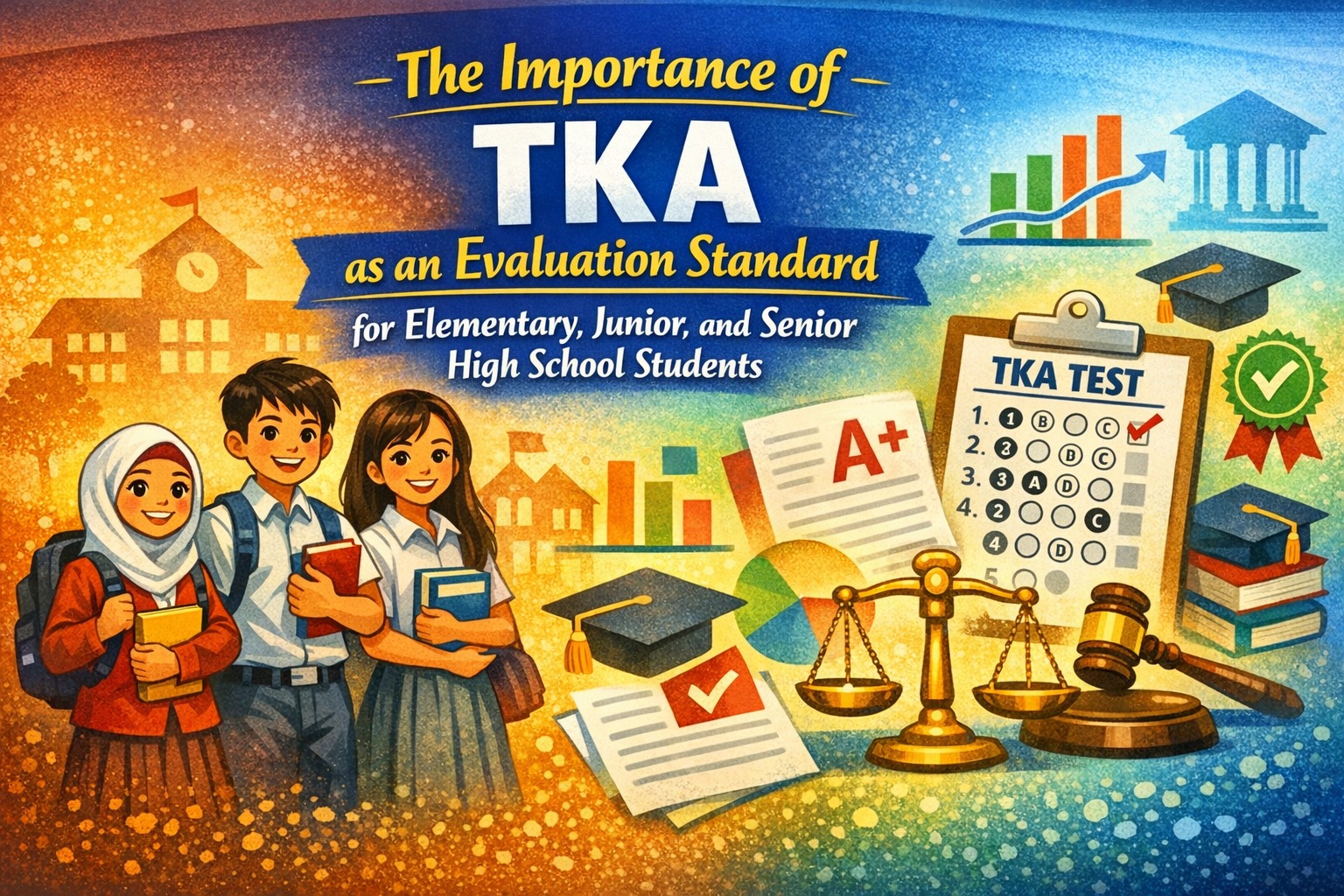
The Academic Competency Test or TKA has become an essential evaluation standard in modern education systems, especially for elementary, junior, and senior high school students. As education continues to evolve, the need for a structured and measurable assessment method becomes increasingly important. TKA provides a standardized way to evaluate students' academic abilities across different levels, ensuring consistency and fairness in the assessment process.
By implementing TKA as an evaluation standard, schools can better understand the academic development of students from an early stage through to higher levels. This allows educators to track progress over time and identify patterns in learning outcomes. As a result, TKA serves not only as a measurement tool but also as a foundation for improving the overall quality of education.
STANDARDIZING STUDENT ASSESSMENT ACROSS LEVELS
One of the key benefits of TKA is its ability to standardize student assessment across elementary, junior, and senior high school levels. Without a unified system, evaluating student performance can become inconsistent and subjective. TKA ensures that all students are measured using the same criteria, making comparisons more reliable and meaningful.
Standardization also helps educators align their teaching methods with national or institutional benchmarks. With clear assessment standards, teachers can design lessons that meet specific learning objectives. This creates a more structured learning environment where students know what is expected of them at each stage of their education.
Furthermore, having a consistent evaluation system supports smooth academic transitions between education levels. Students moving from elementary to junior high or from junior high to senior high can adapt more easily when assessment methods remain familiar. This continuity reduces confusion and helps maintain academic stability.
SUPPORTING HOLISTIC STUDENT DEVELOPMENT
TKA does not only focus on academic knowledge but also contributes to the holistic development of students. By assessing different competencies, TKA provides a broader picture of student abilities, including critical thinking, problem-solving, and analytical skills. This comprehensive evaluation is essential for developing well-rounded individuals.
Holistic development is crucial in preparing students for real-world challenges. Through TKA, educators can identify areas where students need improvement beyond basic academic subjects. This allows for the integration of additional learning activities that enhance soft skills and cognitive abilities.
In addition, TKA encourages students to take their learning seriously and strive for continuous improvement. When students understand that their abilities are being evaluated comprehensively, they are more likely to engage actively in the learning process. This leads to better academic outcomes and personal growth.
PROVIDING DATA FOR EDUCATIONAL IMPROVEMENT
Another important role of TKA is providing accurate and reliable data for educational improvement. The results of TKA can be used by schools and policymakers to evaluate the effectiveness of teaching strategies and curriculum design. This data-driven approach ensures that decisions are based on real evidence rather than assumptions.
With detailed insights from TKA results, educators can identify trends and patterns in student performance. For example, if many students struggle in a particular subject, it may indicate a need to revise teaching methods or learning materials. This continuous evaluation helps improve the quality of education over time.
Moreover, data from TKA can support long-term educational planning. Schools can set realistic goals and implement targeted programs to address specific challenges. This strategic approach ensures that resources are used efficiently and that students receive the support they need to succeed.
PREPARING STUDENTS FOR HIGHER EDUCATION
TKA plays a significant role in preparing students for higher education. By familiarizing students with standardized assessments, TKA helps them develop the skills needed to succeed in more advanced academic environments. This includes critical thinking, time management, and problem-solving abilities.
Early exposure to structured evaluations also reduces anxiety when students face important exams in the future. They become more confident in their abilities and better prepared to handle academic challenges. This confidence is essential for success in competitive educational settings.
Additionally, TKA results can serve as a reference for higher education institutions when evaluating prospective students. By providing a clear measure of academic ability, TKA helps universities make informed decisions about admissions. This creates a more transparent and merit-based selection process.
PROMOTING FAIRNESS AND EDUCATIONAL EQUITY
Fairness is a fundamental principle in any education system, and TKA helps promote this by providing a standardized evaluation method. All students are assessed using the same criteria, reducing bias and ensuring equal opportunities for success. This is particularly important in diverse educational environments.
TKA also helps identify gaps in educational access and achievement. By analyzing assessment results, educators and policymakers can detect disparities among different groups of students. This information is crucial for developing targeted interventions that address inequality.
Furthermore, a fair evaluation system builds trust among students, parents, and educators. When assessments are transparent and consistent, stakeholders are more likely to support educational policies and initiatives. This trust contributes to a more positive and collaborative learning environment.
CONCLUSION
In conclusion, TKA is a vital evaluation standard for students at the elementary, junior, and senior high school levels. It ensures consistency in assessment, supports holistic development, provides valuable data for improvement, prepares students for higher education, and promotes fairness in the education system.
As education continues to advance, the role of standardized assessments like TKA will become even more important. By implementing TKA effectively, schools can create a more structured, equitable, and high-quality learning environment that benefits all students.