 English EN
  Indonesia ID

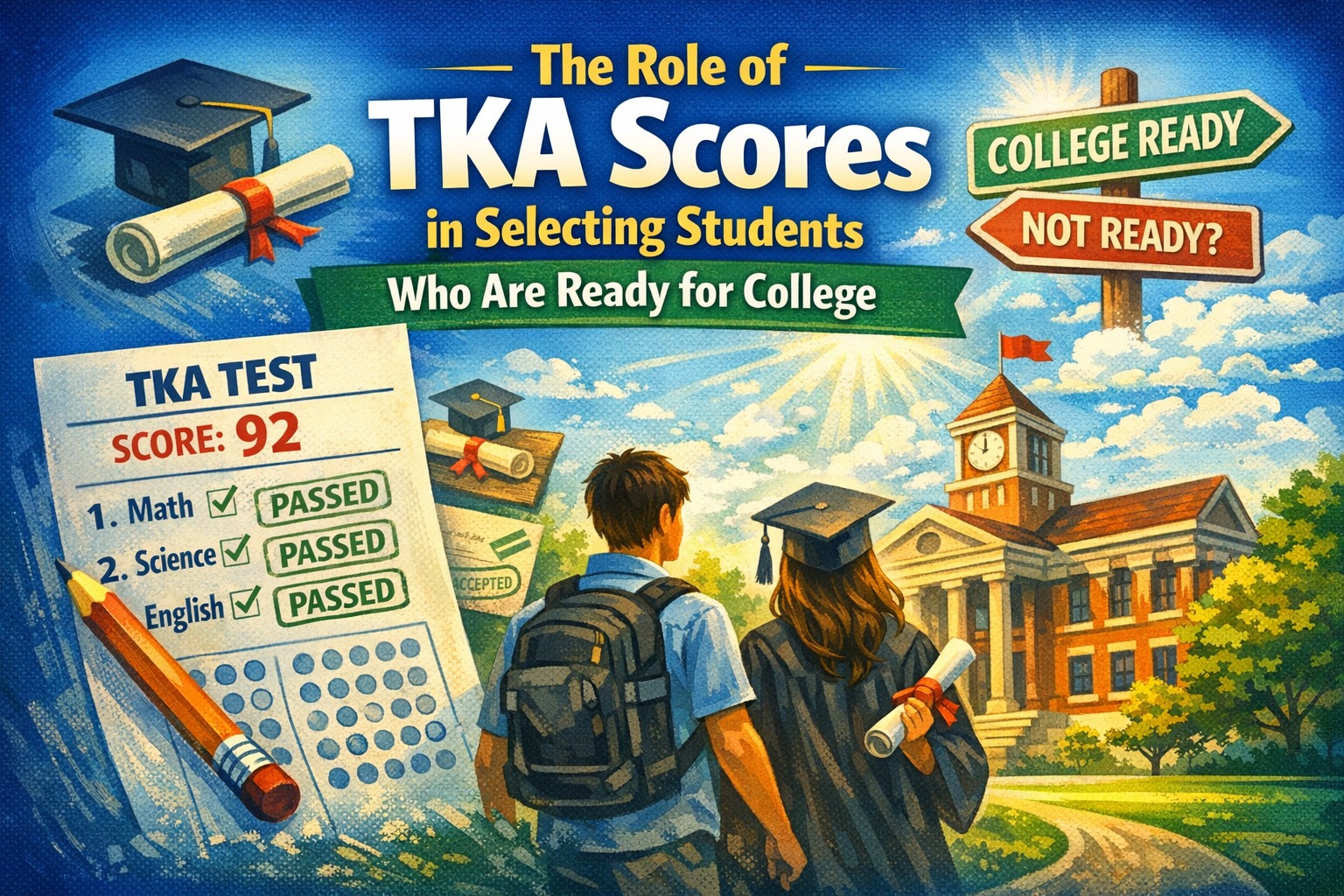
TKA scores play a crucial role in helping universities determine whether prospective students are truly prepared for the challenges of higher education. As a standardized assessment, the Test Kompetensi Akademik evaluates core academic abilities such as reasoning, comprehension, and subject mastery. These components are essential indicators of a student’s readiness to transition from secondary education to the more demanding environment of college.
In today’s competitive academic landscape, universities must carefully select students who can adapt, perform, and succeed in rigorous programs. TKA scores provide a reliable and objective benchmark that supports this selection process. By analyzing these scores, institutions can identify applicants who not only meet academic standards but also demonstrate the intellectual capacity needed for long-term success.
UNDERSTANDING COLLEGE READINESS THROUGH TKA SCORES
College readiness goes beyond basic knowledge and includes critical thinking, problem-solving, and the ability to learn independently. TKA scores are designed to measure these competencies, making them a valuable tool for universities. They reflect how well students can apply what they have learned in various contexts, which is essential for higher education.
Another important aspect of TKA scores is their ability to provide a standardized comparison among applicants. Students come from diverse educational backgrounds with different grading systems, making it difficult to assess them equally. TKA scores create a level playing field, allowing universities to evaluate all candidates using the same criteria.
Moreover, TKA scores can reveal a student’s academic consistency and potential. High scores often indicate strong discipline and effective study habits, which are critical for success in college. These insights help universities make informed decisions when selecting candidates who are truly ready for academic challenges.
TKA SCORES AS A FILTERING TOOL IN ADMISSIONS
Universities often receive a large number of applications, making it challenging to review each one thoroughly. TKA scores serve as an efficient filtering mechanism that helps institutions narrow down their applicant pool. By setting minimum score requirements, universities can quickly identify candidates who meet their academic expectations.
Beyond efficiency, this filtering process ensures that admitted students have a solid academic foundation. Students with strong TKA scores are more likely to keep up with coursework, participate actively in class, and complete their studies successfully. This contributes to the overall quality and reputation of the institution.
In addition, using TKA scores as a filtering tool enhances transparency in admissions. Applicants understand the importance of achieving a certain score, which motivates them to prepare seriously. This clarity benefits both students and universities by creating a more structured and predictable selection process.
ALIGNING TKA SCORES WITH ACADEMIC DEMANDS
Different university programs require different levels of academic ability. TKA scores help institutions match students with programs that suit their strengths. For example, students with high analytical and mathematical scores may be better suited for science and engineering fields.
This alignment ensures that students are not only admitted but also placed in environments where they can thrive. When students enroll in programs that match their abilities, they are more likely to stay motivated and achieve better academic outcomes. This reduces dropout rates and improves overall student satisfaction.
Furthermore, TKA scores provide early indicators of areas where students may need additional support. Universities can use this information to design bridging programs or academic assistance initiatives. This proactive approach helps students adjust more effectively to college life.
BENEFITS OF TKA SCORES FOR STUDENTS
For students, TKA scores offer a valuable opportunity to demonstrate their academic readiness beyond school grades. Since grading systems can vary widely, a standardized test provides a more consistent measure of ability. A strong TKA score can significantly enhance a student’s application profile.
Preparing for TKA also helps students develop important skills such as time management, analytical thinking, and problem-solving. These skills are essential not only for the test but also for succeeding in college. The preparation process itself becomes a form of academic training.
Additionally, TKA scores can guide students in making informed decisions about their future. By understanding their strengths and weaknesses, students can choose study programs that align with their abilities. This leads to better academic performance and a more fulfilling educational experience.
CHALLENGES IN INTERPRETING TKA SCORES
While TKA scores are highly useful, they should not be the sole determinant of college readiness. Some students may not perform well in standardized tests due to anxiety or external factors, even though they have strong academic potential. Universities must consider these limitations when evaluating applicants.
There are also concerns about unequal access to preparation resources. Students from different backgrounds may have varying levels of support, which can influence their performance. This highlights the need for a more inclusive approach in interpreting TKA results.
Therefore, it is important for universities to combine TKA scores with other evaluation methods. By considering academic records, extracurricular activities, and personal achievements, institutions can gain a more comprehensive understanding of each applicant’s readiness for college.
THE FUTURE OF TKA IN COLLEGE ADMISSIONS
As education systems continue to evolve, the role of TKA scores is expected to become more dynamic. Advances in technology may lead to more adaptive testing methods that better reflect individual abilities. These innovations can improve the accuracy and fairness of assessments.
Universities are also exploring more holistic admission models that integrate TKA scores with other indicators. This approach allows institutions to consider both academic performance and personal qualities. It ensures that students are evaluated in a more balanced and meaningful way.
Ultimately, TKA scores will remain an important tool in selecting students who are ready for college. When used alongside other criteria, they help universities identify individuals who are not only academically capable but also prepared to succeed in higher education.