 English EN
  Indonesia ID

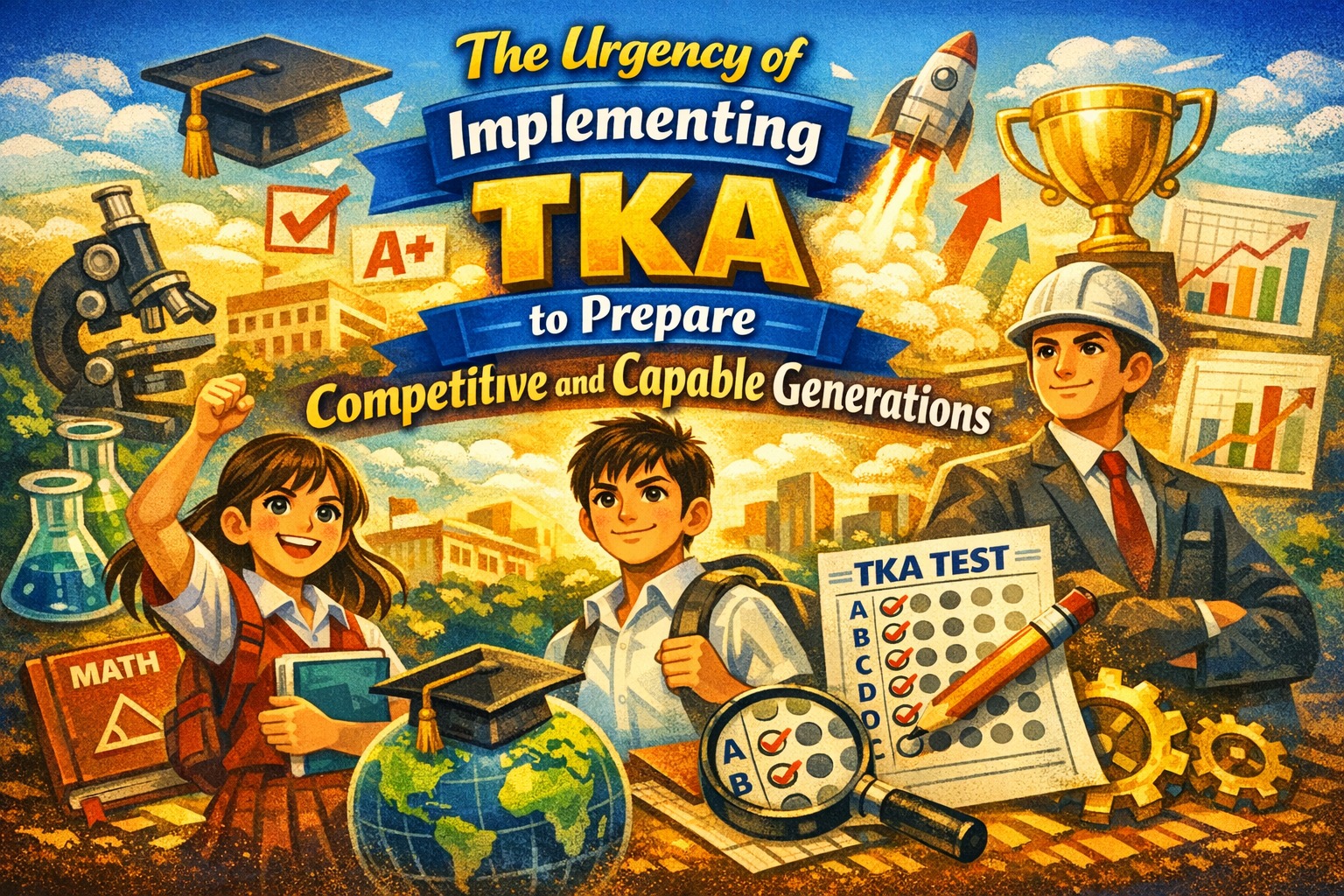
The Academic Competency Test, or TKA, has become increasingly urgent in today’s rapidly evolving education landscape. As global competition intensifies, education systems must ensure that students are equipped with the necessary knowledge and skills to succeed. TKA serves as a structured and standardized tool to measure academic readiness, helping educators identify whether students are prepared to face future challenges.
In addition, implementing TKA supports the development of a more competitive and capable generation. By providing clear benchmarks and measurable outcomes, TKA encourages students to strive for excellence. This not only enhances individual performance but also contributes to the overall quality of human resources, which is essential for national progress and global competitiveness.
STRENGTHENING ACADEMIC FOUNDATIONS
One of the key reasons for the urgency of implementing TKA is its role in strengthening academic foundations. Early and consistent assessment ensures that students build a solid understanding of core subjects. This foundation is critical for supporting more advanced learning at higher education levels.
With TKA, educators can identify gaps in fundamental knowledge and address them promptly. This prevents students from carrying unresolved difficulties into more complex topics. As a result, learning becomes more effective and sustainable over time.
Furthermore, strong academic foundations contribute to greater confidence among students. When they master basic concepts, they are better prepared to tackle challenging material. This confidence plays a significant role in fostering long term academic success.
ENCOURAGING COMPETITIVE LEARNING ENVIRONMENTS
TKA also helps create a competitive learning environment that motivates students to perform at their best. By setting clear standards, students are encouraged to improve their abilities and achieve higher academic outcomes. Healthy competition can drive continuous improvement and innovation in learning.
A competitive environment also benefits teachers and schools. Educators are motivated to enhance their teaching methods to help students achieve better results. This leads to the adoption of more effective and engaging instructional strategies.
In addition, competition fosters resilience and perseverance among students. They learn to handle challenges, overcome setbacks, and continuously improve their performance. These qualities are essential for success in both academic and professional settings.
SUPPORTING SKILL DEVELOPMENT FOR THE FUTURE
Another important aspect of TKA is its role in supporting skill development for the future. Beyond academic knowledge, TKA encourages the development of critical thinking, problem solving, and analytical skills. These competencies are essential in a rapidly changing world.
Through regular assessment, students become more familiar with applying their knowledge in different contexts. This helps them develop the ability to think independently and make informed decisions. Such skills are highly valued in higher education and the workforce.
Moreover, TKA prepares students to adapt to future challenges. By continuously evaluating their abilities, students learn to identify areas for improvement and take proactive steps to enhance their skills. This adaptability is crucial for long term success.
PROVIDING DATA FOR STRATEGIC EDUCATIONAL DEVELOPMENT
The implementation of TKA also provides valuable data for strategic educational development. Assessment results offer insights into student performance at various levels, helping educators and policymakers understand the strengths and weaknesses of the system.
With this data, targeted improvements can be made to curriculum design, teaching methods, and resource allocation. This ensures that educational strategies are aligned with actual needs and challenges. As a result, the overall quality of education can be significantly enhanced.
Additionally, continuous data analysis allows for ongoing evaluation of educational policies. By monitoring progress over time, stakeholders can determine the effectiveness of implemented programs and make necessary adjustments. This data driven approach supports sustainable development in education.
PROMOTING EQUITY AND GLOBAL COMPETITIVENESS
TKA plays a crucial role in promoting equity and global competitiveness. By providing a standardized assessment system, it ensures that all students are evaluated fairly. This creates equal opportunities for students to demonstrate their abilities, regardless of their background.
Equity in education is essential for building a strong and inclusive society. When all students have access to quality assessment and learning opportunities, they are more likely to reach their full potential. TKA supports this goal by identifying gaps and enabling targeted interventions.
Furthermore, improving educational standards through TKA enhances global competitiveness. A well educated and skilled population is better equipped to compete in the international arena. This contributes to economic growth and strengthens a country’s position in the global community.
CONCLUSION
In conclusion, the urgency of implementing TKA lies in its ability to strengthen academic foundations, encourage competitive learning environments, support future skill development, provide data for strategic improvement, and promote equity and global competitiveness. These factors make TKA an essential tool in preparing capable and competitive generations.
As the world continues to change, education systems must adapt to meet new demands. By integrating TKA effectively, educators can ensure that students are well prepared to face future challenges and contribute meaningfully to society.