 English EN
  Indonesia ID

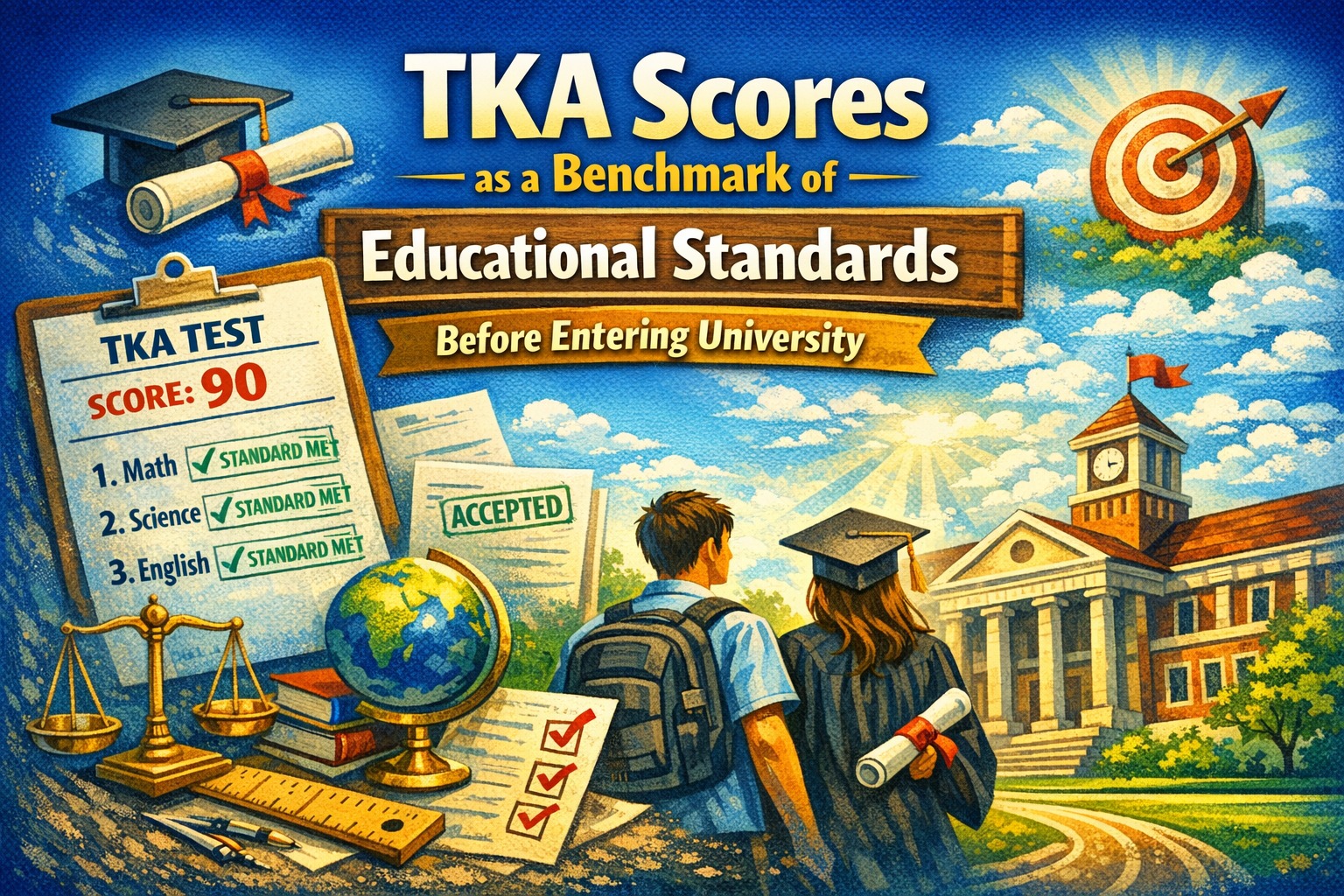
TKA scores have become an essential reference point for measuring educational standards among students preparing to enter university. As a standardized academic assessment, the Test Kompetensi Akademik evaluates knowledge, reasoning ability, and subject comprehension across a consistent framework. This allows universities to determine whether applicants meet the minimum academic expectations required for higher education.
In a diverse educational system where grading methods and curriculum quality may vary, TKA scores provide a unified benchmark that ensures fairness. Universities rely on these scores to compare students from different schools and regions objectively. By doing so, they can maintain consistent admission standards while identifying candidates who are academically prepared for university-level learning.
THE SIGNIFICANCE OF TKA SCORES IN EDUCATIONAL STANDARDIZATION
Educational standardization is crucial for maintaining quality and consistency in higher education. TKA scores play a key role in this process by offering a uniform measure of academic achievement. This helps universities ensure that all admitted students meet a certain level of competence, regardless of their educational background.
Another important aspect is the ability of TKA scores to reduce disparities in school grading systems. Different schools may apply varying levels of difficulty and assessment criteria, making it challenging to compare students fairly. TKA provides a standardized evaluation that balances these differences and creates a more equitable admission process.
Furthermore, TKA scores support national efforts to improve educational quality. By analyzing test results, educators and policymakers can identify gaps in learning and make necessary improvements. This contributes to a stronger and more consistent education system overall.
HOW TKA SCORES REFLECT ACADEMIC COMPETENCY
TKA scores are designed to measure a student’s understanding of essential academic subjects and their ability to apply knowledge effectively. This includes evaluating analytical thinking, problem-solving skills, and comprehension. These competencies are critical for success in university, where students are expected to engage in deeper and more complex learning.
In addition, TKA scores provide insights into a student’s intellectual readiness. High scores often indicate strong cognitive abilities and a solid grasp of fundamental concepts. This suggests that the student is capable of handling the demands of higher education without significant difficulty.
Moreover, TKA scores highlight areas where students may need improvement. Universities can use this information to provide academic support or preparatory programs. This ensures that students are not only admitted but also equipped to succeed in their chosen fields of study.
THE ROLE OF TKA IN MAINTAINING UNIVERSITY QUALITY
Universities aim to maintain high academic standards, and TKA scores help them achieve this goal. By selecting students who meet established benchmarks, institutions can ensure that their academic programs remain rigorous and effective. This contributes to better learning outcomes and higher graduation rates.
TKA scores also help universities build a strong academic community. When students share a similar level of preparedness, it creates a more balanced and productive learning environment. This allows instructors to deliver material at an appropriate level without needing to compensate for significant skill gaps.
Additionally, maintaining quality through TKA-based selection enhances a university’s reputation. Institutions that consistently admit well-prepared students are more likely to produce successful graduates. This, in turn, strengthens their credibility and attractiveness to future applicants.
BENEFITS OF TKA SCORES FOR STUDENTS AND INSTITUTIONS
For students, TKA scores provide a clear indicator of their academic standing. This helps them understand whether they are ready for university and what areas they need to improve. A strong score can also increase their chances of being accepted into competitive programs.
For universities, TKA scores simplify the admission process by offering a reliable and objective evaluation tool. This reduces the complexity of comparing applicants from different educational backgrounds. It also helps institutions make faster and more accurate decisions.
Moreover, TKA scores encourage both students and schools to focus on academic excellence. Knowing that these scores play a significant role in university admission motivates students to study more effectively. At the same time, schools are encouraged to improve their teaching methods to help students perform better.
CHALLENGES IN USING TKA SCORES AS A BENCHMARK
Despite their advantages, TKA scores are not without limitations. One challenge is that standardized tests may not fully capture a student’s overall potential. Factors such as creativity, leadership, and communication skills are not always reflected in test results.
Another issue is the potential inequality in access to preparation resources. Students from well-supported backgrounds may have an advantage in achieving higher scores. This can create disparities that universities need to consider when evaluating applicants.
Therefore, it is important to use TKA scores as part of a broader assessment strategy. By combining them with other criteria such as academic records and extracurricular achievements, universities can create a more balanced and inclusive admission process.
THE FUTURE OF TKA AS AN EDUCATIONAL BENCHMARK
As education continues to evolve, the role of TKA scores is expected to expand and improve. Advances in technology may lead to more sophisticated testing methods that provide deeper insights into student abilities. These innovations can enhance the accuracy and relevance of TKA as a benchmark.
Universities are also likely to adopt more flexible approaches in interpreting TKA scores. Instead of relying solely on fixed thresholds, they may consider individual contexts and learning backgrounds. This approach can make admissions more inclusive while still maintaining academic standards.
Ultimately, TKA scores will remain a vital tool in defining educational standards before entering university. When used effectively, they help ensure that students are prepared, institutions maintain quality, and the education system continues to improve.