 English EN
  Indonesia ID

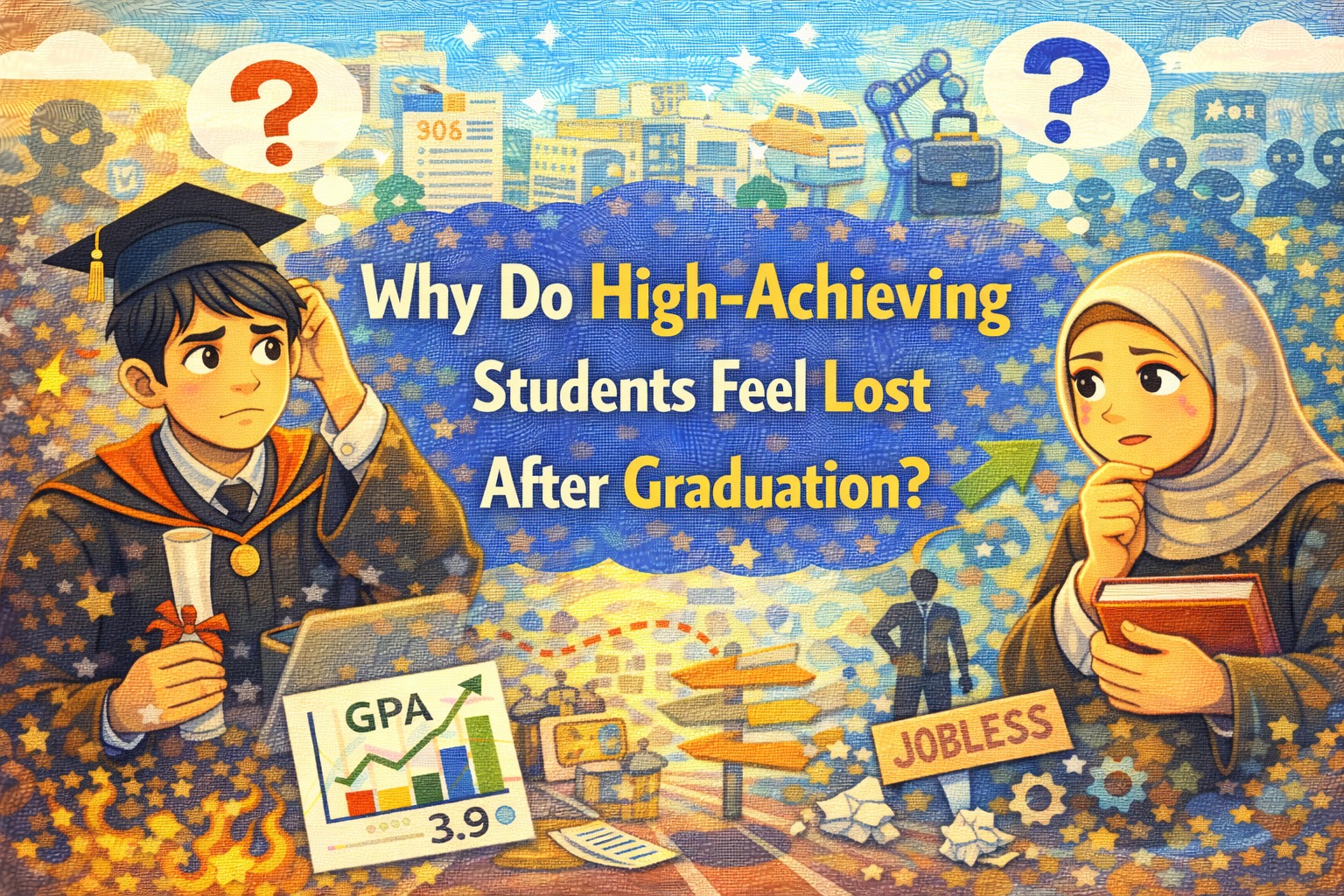
Graduation is often seen as the ultimate reward for hard work, especially for high-achieving students. Yet, many of them report feeling lost, uncertain, or unprepared once they step into the professional world. Academic success does not automatically translate into readiness for real-life challenges, and understanding why this gap exists can help students navigate the transition more effectively.
THE GAP BETWEEN ACADEMICS AND PROFESSIONAL LIFE
High-achieving students excel in exams, projects, and theoretical knowledge. However, the workplace demands practical skills, adaptability, and emotional intelligence—areas that are not always emphasized in academic settings. The shift from structured coursework to open-ended professional challenges can be overwhelming, leading to feelings of confusion and self-doubt.
THE ROLE OF SOFT SKILLS AND EXPERIENCE
Academic excellence alone cannot prepare students for teamwork, communication, or leadership responsibilities. Experiences such as internships, volunteering, and collaborative projects provide opportunities to develop these critical skills. Without them, even the brightest students may struggle to navigate workplace expectations and social dynamics.
STRATEGIES TO BRIDGE THE GAP
To reduce post-graduation uncertainty, students can:
* Participate in internships or professional programs
* Develop communication, leadership, and problem-solving skills
* Engage in student organizations or group projects
* Build a professional network early
* Learn industry-specific tools and techniques
CONCLUSION
High grades and academic achievements are valuable, but they do not guarantee immediate success after graduation. By combining strong academic performance with practical experience and soft skill development, high-achieving students can feel more confident, capable, and ready to face professional challenges.