 English EN
  Indonesia ID

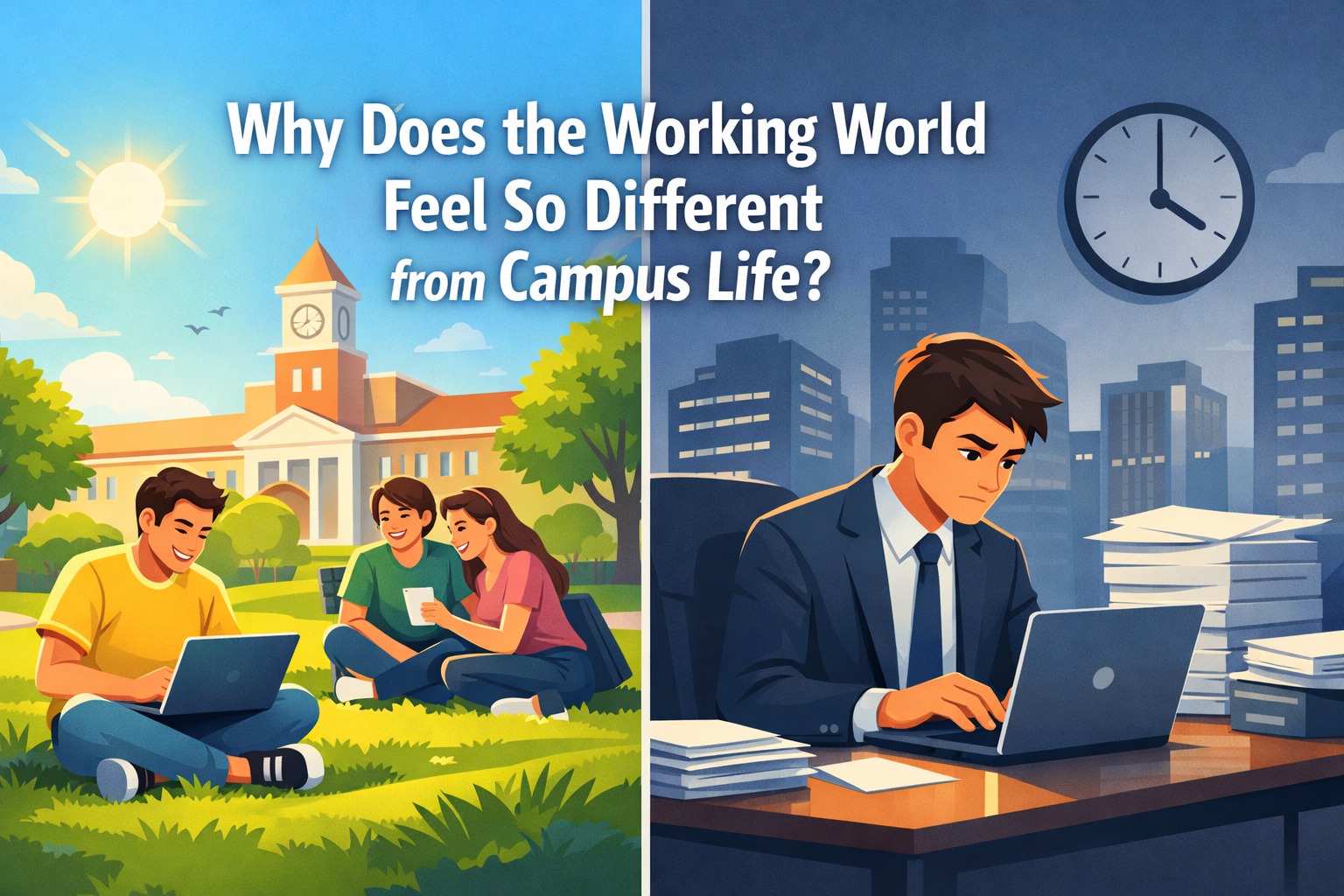
Many new graduates are surprised when they first enter the workforce. Busy routines, significant responsibilities, and target pressures often make office life feel very different from the flexibility of campus life. This change can trigger confusion, stress, and even insecurity in the early career phase.
So, why does the workplace feel so different from college life? Understanding these differences is important for a smoother transition from student to professional.
Differences in Learning and Working Patterns
In college, the main focus is the learning process. Students are given space to try, discuss, and even make mistakes as part of growth. Academic grades are the primary measure of success.
In contrast, the workplace evaluates results and real contributions. Tasks must meet company standards and clear deadlines. Mistakes are no longer just part of learning but can directly impact teams or clients.
Higher Levels of Discipline
Campus life tends to provide flexibility in scheduling. Students can choose classes, delay assignments (with risks), or adjust study time.
In the workplace, discipline is essential. Working hours, meeting attendance, and task completion must be consistently maintained. Delays or negligence can directly affect performance evaluations.
Real Professional Responsibility
In college, responsibilities are generally personal and mainly affect grades or individual achievements. In the workplace, responsibilities are collective and professional.
Each task performed can influence team performance, client satisfaction, and even company reputation. This pressure makes the workplace feel more serious and challenging than campus life.
Changes in Social Environment
Campus environments usually consist of peers of similar age and background. Interactions feel relaxed and communal.
In the workplace, individuals interact with different generations, personalities, and communication styles. Professional relationships require respect, ethics, and clear boundaries.
Different Evaluation Systems
In college, evaluation systems are clear through exams, assignments, and presentations. In the workplace, performance is assessed through target achievement, contribution, and overall performance.
These evaluations are continuous and influence career progression, promotions, and salary increases. This makes workplace pressure feel more real compared to academic systems.
A More Structured Life Rhythm
Students often have flexible time for organizations, hobbies, or socializing. After starting work, daily routines become more structured with fixed working hours.
This shift in life rhythm requires adjustment, especially in managing rest, personal activities, and professional responsibilities.
How to Respond to These Differences
To avoid feeling overwhelmed, new graduates must prepare mentally and skillfully. Developing soft skills, improving time management, and building professional communication are crucial for adaptation.
It is also important to understand that feeling shocked at the beginning is normal. With time and experience, the differences between campus and workplace life will become easier to manage.
Conclusion
The workplace feels very different from college life due to differences in work patterns, discipline levels, professional responsibilities, social environments, evaluation systems, and life rhythm. These changes require stronger adaptability.
With mental readiness, professional attitude, and a willingness to continue learning, new graduates can adjust more quickly and grow optimally in their careers.