 English EN
  Indonesia ID

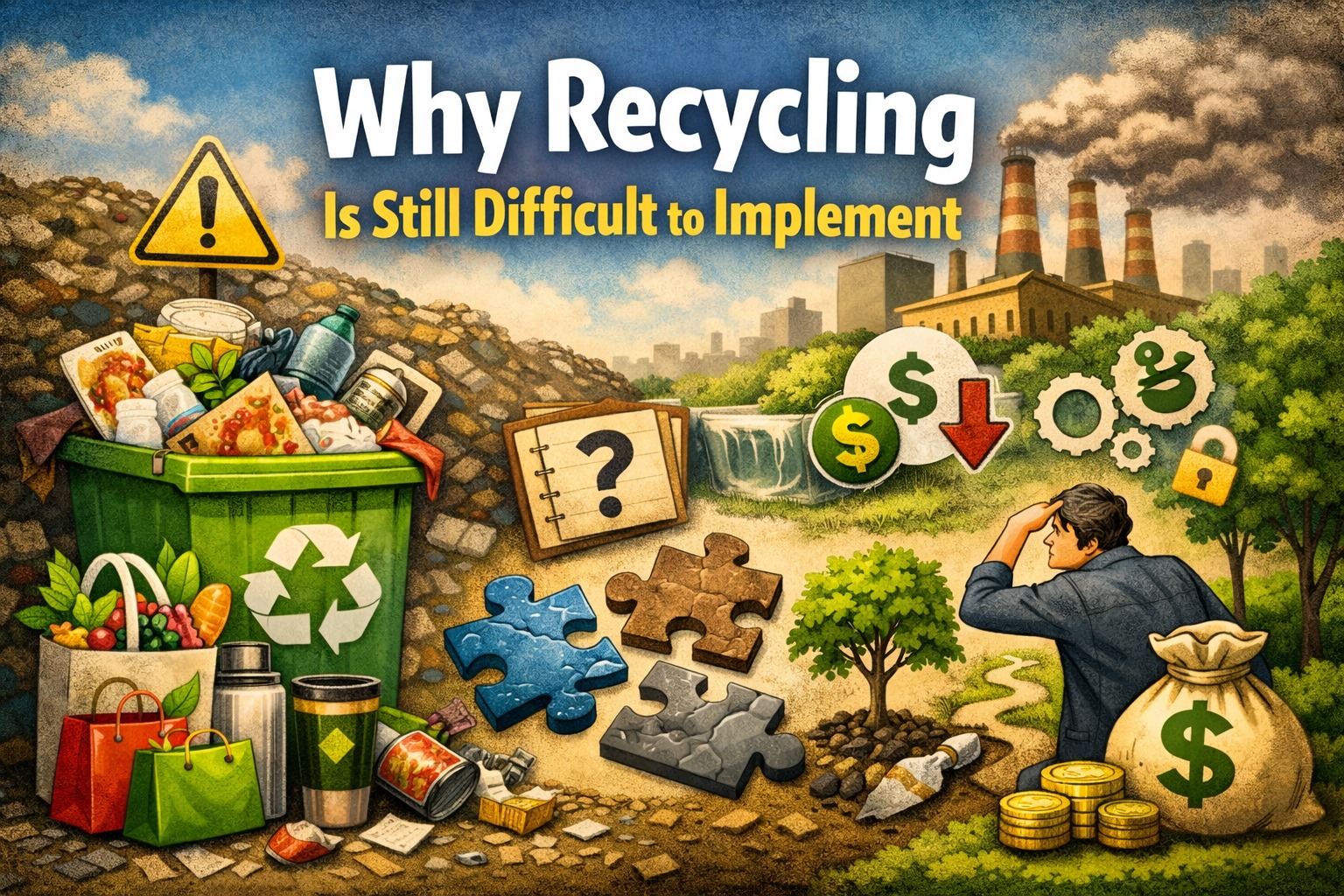
Recycling is often promoted as one of the easiest ways to protect the environment. Many people believe that simply separating waste is enough to make a difference. However, the reality is far more complex. Despite global awareness campaigns and government initiatives, recycling remains difficult to implement effectively in many parts of the world.
---
## THE GAP BETWEEN AWARENESS AND ACTION
Public awareness about recycling has grown significantly over the past decade. Schools, social media, and environmental campaigns continuously encourage people to reduce waste and recycle more.
Yet, awareness does not always translate into action. Many households still mix recyclable and non-recyclable waste, often due to confusion, lack of motivation, or limited facilities. Without consistent habits, recycling programs struggle to achieve meaningful results.
---
## LACK OF PROPER INFRASTRUCTURE
One of the biggest barriers to recycling is inadequate infrastructure. In many regions, recycling bins, collection systems, and processing facilities are limited or unavailable.
Even when people separate their waste, it may still end up in landfills due to insufficient recycling plants. Without proper systems in place, recycling efforts become inefficient and discouraging.
---
## CONFUSION ABOUT RECYCLING RULES
Recycling rules vary from place to place, and this inconsistency creates confusion. Many people are unsure about what can and cannot be recycled.
Common questions include:
* Can pizza boxes be recycled?
* Are plastic bags recyclable?
* Should bottles be rinsed before disposal?
This uncertainty leads to contamination, which reduces the effectiveness of recycling programs.
---
## ECONOMIC CHALLENGES IN RECYCLING
Recycling is not always financially profitable. Collecting, sorting, and processing recyclable materials can be expensive. When the cost of recycling exceeds the value of the materials, companies may choose cheaper alternatives such as landfills or incineration.
Market demand also affects recycling. When prices for recycled materials drop, recycling becomes less attractive for businesses.
---
## HABITS AND LIFESTYLE FACTORS
Convenience plays a major role in human behavior. If recycling requires extra effort, many people may skip it.
Busy lifestyles, limited space for waste separation, and lack of immediate rewards make recycling feel less urgent compared to other daily responsibilities.
---
## HOW WE CAN IMPROVE RECYCLING EFFORTS
Although challenges exist, recycling can still become more effective with the right strategies.
### 1. SIMPLIFY RECYCLING GUIDELINES
Clear and consistent rules help people understand how to recycle correctly.
### 2. INVEST IN INFRASTRUCTURE
Governments and private sectors must expand recycling facilities and improve waste management systems.
### 3. EDUCATE FROM AN EARLY AGE
Teaching children about recycling builds lifelong habits.
### 4. ENCOURAGE CORPORATE RESPONSIBILITY
Businesses can design products with recyclable packaging and support circular economy practices.
---
## CONCLUSION
Recycling remains difficult to implement because it involves more than individual effort. Infrastructure, education, economics, and behavior all play a role. By addressing these challenges collectively, society can move closer to a more sustainable future where recycling becomes a natural part of everyday life.
---